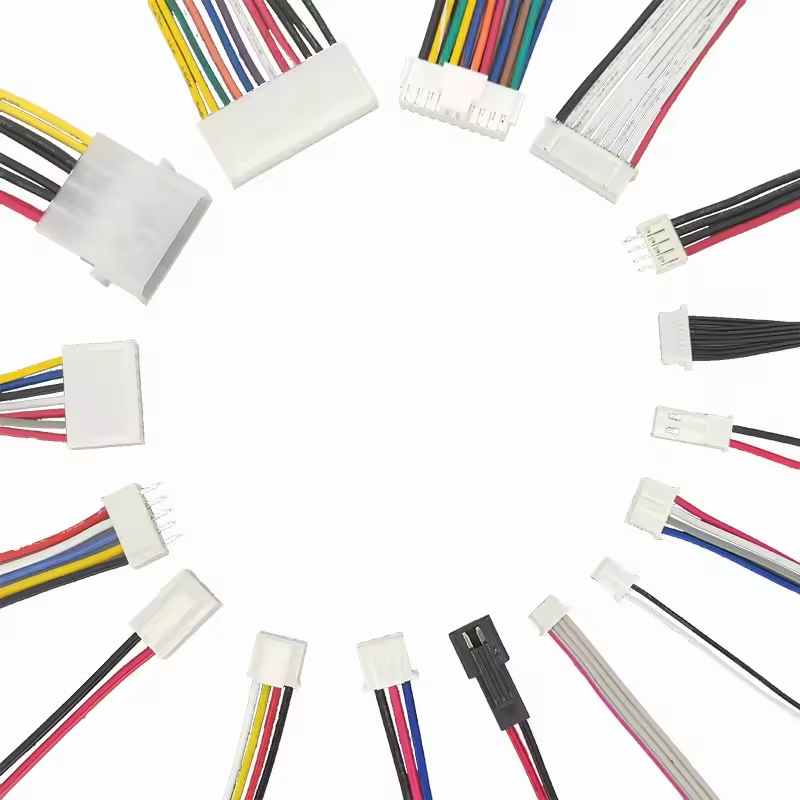
A compromised wiring harness acts as a single point of failure within any complex assembly. It triggers system downtime, product recalls, and severe safety hazards. Choosing the right vendor represents a strict risk-management decision rather than a simple cost-saving exercise. Engineering and procurement teams often struggle with this process. You must balance stringent compliance requirements, volatile component lead times, and strict unit metrics when outsourcing production.
To mitigate supply chain risk, organizations must evaluate potential manufacturing partners rigorously. You need a strict framework covering engineering capability, quality management systems, production scalability, and lifecycle support. A reliable partner ensures your designs transition smoothly from prototype to full-scale production. They catch design flaws early and optimize routing for manufacturability. This guide provides a technical evaluation framework to help you select a manufacturing partner capable of meeting your exact engineering specifications.
Certification is the Baseline: Do not evaluate vendors lacking IPC/WHMA-A-620 compliance and industry-specific certifications (e.g., IATF 16949 for automotive, ISO 13485 for medical).
Tooling and Sourcing Capabilities Dictate Lead Times: A manufacturer’s internal tooling library for standard components (like a JST MOLEX wiring harness) directly impacts Non-Recurring Engineering (NRE) costs and prototyping speed.
Testing Must Be Comprehensive: Visual inspection is insufficient. Require automated continuity, Hi-Pot (high potential), and mechanical pull testing for all production runs.
Scalability Requires Automation: Transitioning from prototype to an OEM wiring harness requires a partner with automated wire cutting, stripping, and crimping machinery to maintain consistency at scale.
Defining Your Project Scope and Success Criteria
You must define your exact project parameters before contacting any manufacturer. Vague specifications lead to inaccurate quotes and production delays. A detailed scope document aligns your engineering needs with the vendor's capabilities. We always recommend building a comprehensive technical package before issuing a Request for Quote (RFQ).
Environmental and Mechanical Constraints
Document the exact operating environment for your assembly. High-temperature environments demand cross-linked polyethylene (XLPE) or PTFE insulation. Standard PVC degrades, becomes brittle, and cracks under extreme heat. Assess all chemical exposure risks. Hydraulic fluids, industrial solvents, and harsh cleaning agents require specialized wire jacketing like polyurethane or thermoplastic elastomers.
Vibration profiles dictate the need for robust strain relief. High-flex applications require finely stranded conductors rather than solid wire. Specify IP-rated sealed connectors if the assembly faces moisture or dust ingress. Documenting these constraints ensures the manufacturer selects appropriate raw materials during the quoting phase. You should map out the following mechanical constraints:
Maximum and minimum operating temperatures.
Expected flex cycles over the product's lifespan.
Exposure to UV radiation or outdoor elements.
Abrasion risks along the routing path.
Required pull-out force for all connector terminations.
Volume, Mix, and MOQ Requirements
Identify your production volume structure. Low-Volume/High-Mix (LVHM) production suits specialized industrial equipment, medical devices, or aerospace applications. These facilities need agile changeover processes and highly skilled manual operators. High-Volume/Low-Mix (HVLM) production fits consumer electronics or standard automotive platforms, relying heavily on automated processing lines.
Align your production needs with the vendor's Minimum Order Quantity (MOQ) thresholds. Some facilities specialize in massive automated runs and reject small batches. Others thrive on complex, low-volume custom assemblies. Selecting a partner whose business model matches your volume prevents friction during scaling. If you force a high-volume shop to build fifty custom cables, you will experience poor service and extended lead times.
Regulatory and Compliance Targets
Establish the necessary certifications the final assembly must meet. Common standards include UL 758 for appliance wiring material, CSA, CE, or military specifications (MIL-SPEC). Environmental compliance also plays a major role in material selection. Ensure the manufacturer strictly adheres to RoHS 3 and REACH directives. They must provide material declarations for every component on the Bill of Materials (BOM). Failure to meet these regulatory targets blocks your product from entering specific international markets and triggers customs seizures.
Types of Wiring Harness Manufacturers
The manufacturing landscape features several distinct types of vendors. Understanding these categories helps you target the right partner for your specific assembly needs. You cannot treat all contract manufacturers as interchangeable entities.
Specialized Harness Houses vs. General Contract Manufacturers
Specialized harness houses focus entirely on wire processing. They possess deep expertise in crimp force monitoring, specialized tooling, and harness-specific testing. These facilities invest heavily in automated cut-strip-terminate equipment from brands like Komax or Schleuniger. They represent the best choice for complex, standalone harness assemblies where wire processing is the primary value add.
General Contract Manufacturers (CMs) handle full box-build assemblies. The harness represents just one component of their overall build. They excel at integrating the harness into a larger electromechanical system, managing sheet metal, PCBAs, and final packaging. However, many general CMs outsource the actual harness production to specialized houses. You must clarify their internal wire processing capabilities during the initial audit to avoid hidden markups.
Domestic vs. Nearshore vs. Offshore Production
Evaluate the trade-offs between different geographic production regions. Domestic partners excel during the New Product Introduction (NPI) phase. They offer rapid communication, fast prototyping, and strong intellectual property protection. When you need an engineer on-site within 24 hours to troubleshoot a routing issue, domestic partners provide unmatched agility.
Offshore production provides significant labor arbitrage for mature, high-volume runs. However, offshore sourcing introduces shipping logistics complexities, port delays, and longer lead times. Ocean freight adds four to six weeks to your delivery schedule. Nearshore options balance these factors. They offer lower labor rates than domestic facilities while maintaining favorable time zones and shorter transit times via ground freight.
Core Evaluation Dimensions for a Wiring Harness Manufacturer
Evaluating a wiring harness manufacturer requires a systematic approach. You must look past the initial quote and assess their underlying operational infrastructure. A low piece-price means nothing if the vendor ships defective parts that shut down your assembly line.
Engineering Support and Design for Manufacturability (DFM)
Assess the vendor's ability to review your CAD drawings critically. A strong engineering team suggests routing optimizations to reduce wire length and eliminate pinch points. They recommend connector alternatives to improve availability and reduce lead times. They also suggest shielding improvements, like braided copper or foil wraps, to mitigate electromagnetic interference (EMI) in sensitive signal lines.
Evaluate their process for creating accurate build boards. Complex assemblies require physical form boards (nail boards) for accurate routing, branching, and bundling. Review their capability to reverse-engineer legacy harnesses. You may lack original documentation for older products. The vendor must accurately deconstruct the physical sample, identify obsolete connectors, and generate a modern, manufacturable BOM.
Component Sourcing and Supply Chain Integrity
Analyze the manufacturer's authorized distributor network. Counterfeit components cause catastrophic field failures, particularly in high-vibration environments where fake terminals lose their spring tension. The vendor must purchase exclusively from franchised distributors or direct from component manufacturers. Ask for their counterfeit mitigation policy.
Evaluate their internal tooling inventory. A robust library of applicators and dies reduces upfront costs. For example, their capability to produce a certified JST MOLEX wiring harness without charging you for new applicator dies accelerates the project. Assess their safety stock policies for long-lead-time items like specialty resins or custom overmolds. They must demonstrate agility in sourcing drop-in replacements during global component shortages.
Quality Assurance, Traceability, and Certifications
Verify strict adherence to IPC/WHMA-A-620. This serves as the foundational industry standard for cable and wire harness assemblies. It dictates acceptability criteria for crimps, splices, routing, and tie-wrap spacing. Specify whether your product requires Class 1 (General), Class 2 (Dedicated Service), or Class 3 (High Performance/Harsh Environment) compliance.
Ensure they maintain a baseline ISO 9001:2015 Quality Management System. Depending on your sector, require AS9100 for aerospace, IATF 16949 for automotive, or ISO 13485 for medical devices. Confirm the vendor utilizes robust ERP systems. They must track raw material lots down to the individual harness level. This traceability remains critical for targeted recalls and accurate root-cause analysis.
Testing and Validation Capabilities
Electrical testing must be comprehensive and automated. Require automated continuity testing to verify correct pin-outs. Short/open detection catches routing errors immediately. Specify Hi-Pot testing for high-voltage applications. This applies high voltage (often 1000V or more) to ensure insulation integrity and detect microscopic flaws that could cause arcing.
Mechanical testing validates physical durability. The vendor must perform destructive pull testing to measure crimp tensile strength against AWG standards. Cross-section analysis examines the crimp profile under a microscope. This confirms proper gas-tight compression between the wire strands and the terminal barrel, ensuring no voids exist where oxidation could form.
Project Management and Communication
Evaluate their account management structure. The vendor should assign dedicated account managers and engineering liaisons to your project. This ensures seamless communication and accountability. You should never have to guess who is managing your production schedule.
Assess time zone overlaps and language proficiencies if working with offshore vendors. Review the transparency of their reporting processes. They must communicate proactively during production delays or Engineering Change Orders (ECOs). Hidden delays cascade into massive supply chain disruptions. Ask for examples of their weekly open order reports.
Evaluating Custom Wire Harness Capabilities vs. OEM Production
The requirements for prototyping differ vastly from full-scale production. You must evaluate the vendor's ability to handle both phases effectively without compromising quality or speed.
Prototyping a Custom Wire Harness
Assess the vendor's dedicated NPI team. They must execute rapid prototyping without disrupting their main production lines. A dedicated prototype cell accelerates iteration cycles. This team should have access to 3D printers for rapid housing fit-checks and universal crimping tools for low-volume terminal application.
Evaluate their agility in handling ECOs. Design changes happen frequently during the beta testing phase of a custom wire harness. The vendor must update documentation, modify build boards, and source new components rapidly. Slow ECO implementation delays your entire product launch. Ask how they quarantine obsolete revisions on the shop floor to prevent accidental builds of old designs.
Scaling to OEM Wiring Harness Production
Review the vendor's capital equipment for high-volume runs. Manual crimping introduces unacceptable variability at scale. Do they utilize automated cut-strip-terminate machines? These machines eliminate human error, monitor crimp force in real-time, and ensure perfect consistency across tens of thousands of units.
Evaluate their capacity for advanced manufacturing techniques. Transitioning to an OEM wiring harness often requires ultrasonic welding for reliable splicing. Automated overmolding provides superior strain relief and environmental sealing compared to manual heat shrink application. The vendor must possess this equipment in-house to maintain quality control at high volumes.
Cost Drivers and Value Influencing Factors
Understanding what drives the cost of your assembly helps you negotiate effectively. Look beyond the piece-price to evaluate the overall value proposition and long-term reliability.
Tooling and NRE Costs
Understand how custom components impact upfront costs. Unique overmolds require expensive steel or aluminum molds. Specialized test fixtures require custom programming and interface boards. You must calculate whether these NRE costs make sense when amortized over your total production volume. Leveraging standard, off-the-shelf connectors eliminates these tooling charges entirely.
Material Selection Trade-offs
Balance the upfront cost of premium materials against long-term reliability. Cross-linked polyethylene costs more than standard PVC. However, it prevents insulation failure in high-heat environments. Choosing cheaper materials often leads to increased warranty claims, field maintenance costs, and brand damage. Copper weight also drives cost; over-specifying wire gauge adds unnecessary expense and weight to the final assembly.
Labor vs. Automation
Analyze how the manufacturer's level of automation offsets labor costs. Highly automated domestic facilities can often compete with manual offshore facilities on piece-price for simple assemblies. Automation also drastically reduces defect rates. Factor the cost of poor quality, rework, and scrap into your labor comparisons.
Tiered Pricing and MOQs
Understand how volume commitments influence the final unit cost. Blanket orders allow the manufacturer to purchase raw materials in bulk. This reduces their costs, which they should pass on to you. Negotiate tiered pricing structures based on realistic annual usage projections. Ensure you understand their liability terms for unused raw materials if your product reaches end-of-life unexpectedly.
Cost Driver
Impact on Production
Mitigation Strategy
Custom Tooling (NRE)
High upfront cost, extends lead time for initial prototypes by weeks.
Utilize standard connectors where possible; leverage vendor's existing tooling library.
Material Selection
Premium insulation (PTFE) and shielding increase unit cost significantly.
Match material specifications strictly to environmental constraints; avoid over-engineering.
Labor Intensity
Manual assembly increases variable costs and defect probability.
Design for manufacturability (DFM) to maximize automated cut-strip-terminate processes.
Order Volume
Low volumes trigger MOQ penalties and higher per-unit component costs.
Implement blanket purchase orders and staggered delivery schedules.
Testing Requirements
Complex Hi-Pot or RF testing requires specialized fixtures and longer cycle times.
Specify testing parameters clearly in the RFQ to avoid post-award price hikes.
Implementation Risks and Vendor Transition Mitigation
Switching vendors or launching a new product introduces significant risk. You must implement strict protocols to validate the new manufacturing process before authorizing full-scale production.
Managing the First Article Inspection (FAI)
Establish a strict FAI protocol before authorizing full production. Utilize AS9102 or equivalent documentation standards. The FAI validates that the manufacturing process consistently produces parts meeting your specifications. You should require the following during the FAI process:
Full dimensional layout verification against the 2D drawing.
Material certifications for all wires, terminals, and housings.
Crimp pull-test data and micrograph cross-section reports.
Electrical test reports confirming continuity and insulation resistance.
Photographic evidence of the routing and tie-wrap placement.
Supply Chain Redundancy
Mitigate the risk of vendor lock-in. Ensure you own all design files, BOMs, and custom tooling. If a vendor fails to deliver, you must have the ability to move production rapidly. Relying on a vendor's proprietary documentation traps you in a single-source situation. Always stipulate tooling ownership in your initial manufacturing agreement.
Lead Time Management
Structure blanket purchase orders to secure production capacity. Implement Kanban agreements to buffer against raw material shortages. The vendor holds safety stock of finished goods or long-lead components. You pull from this stock as needed, ensuring a continuous supply line even if component manufacturers extend their lead times.
Post-Sales Support and RMA Processes
Define the protocol for field failure analysis. The vendor must have a clear Return Merchandise Authorization (RMA) process. Require detailed Corrective and Preventive Action (CAPA) reporting for any defects. They must identify the root cause, whether it is a material defect or an operator error, and implement process changes to prevent recurrence.
Conclusion
Select a manufacturer based on their engineering infrastructure, quality systems, and automated testing capabilities. Avoid making decisions solely on the lowest quoted piece-price, as poor quality will erode any initial savings.
Filter your initial candidate list strictly by required industry certifications and IPC/WHMA-A-620 compliance.
Audit the vendor's internal tooling library to identify opportunities for reducing NRE costs.
Issue a detailed Request for Quote (RFQ) containing a comprehensive BOM, CAD files, and exact testing parameters.
Request a facility audit or a sample First Article build from your top two contenders before signing a blanket order.
FAQ
Q: What certifications should a wiring harness manufacturer have?
A: At a minimum, they must adhere to IPC/WHMA-A-620 standards. They should also hold an ISO 9001:2015 certification. Depending on your industry, look for sector-specific certifications like IATF 16949 for automotive, AS9100 for aerospace, or ISO 13485 for medical devices.
Q: How long does it take to prototype a custom wire harness?
A: Prototyping typically takes two to six weeks. The exact timeline depends heavily on component availability. Using standard, in-stock connectors accelerates the process. Custom overmolds or specialty wire can extend lead times significantly.
Q: What is the difference between an OEM wiring harness and an aftermarket harness?
A: An OEM harness is built to the original equipment manufacturer's exact factory specifications. It guarantees perfect fitment and performance. Aftermarket harnesses often use generic connectors, different wire gauges, or alternative routing to reduce costs, which compromises long-term reliability.
Q: Why is IPC/WHMA-A-620 important for harness manufacturing?
A: It provides the industry consensus standard for quality and acceptability. It defines exact criteria for crimp quality, soldering, splicing, and routing. Mandating this standard ensures consistent, reliable manufacturing practices across all production runs.
Q: How do manufacturers test wiring harnesses for reliability?
A: They use automated test boards for continuity and short/open detection. High-voltage applications require Hi-Pot testing to verify insulation integrity. Mechanical reliability is validated through destructive pull testing and microscopic cross-section analysis of the crimps.
Q: What are NRE costs in wire harness manufacturing?
A: Non-Recurring Engineering (NRE) costs cover the one-time expenses required to set up production. This includes designing custom build boards, programming automated test fixtures, and purchasing specific applicator dies or custom overmold tooling.