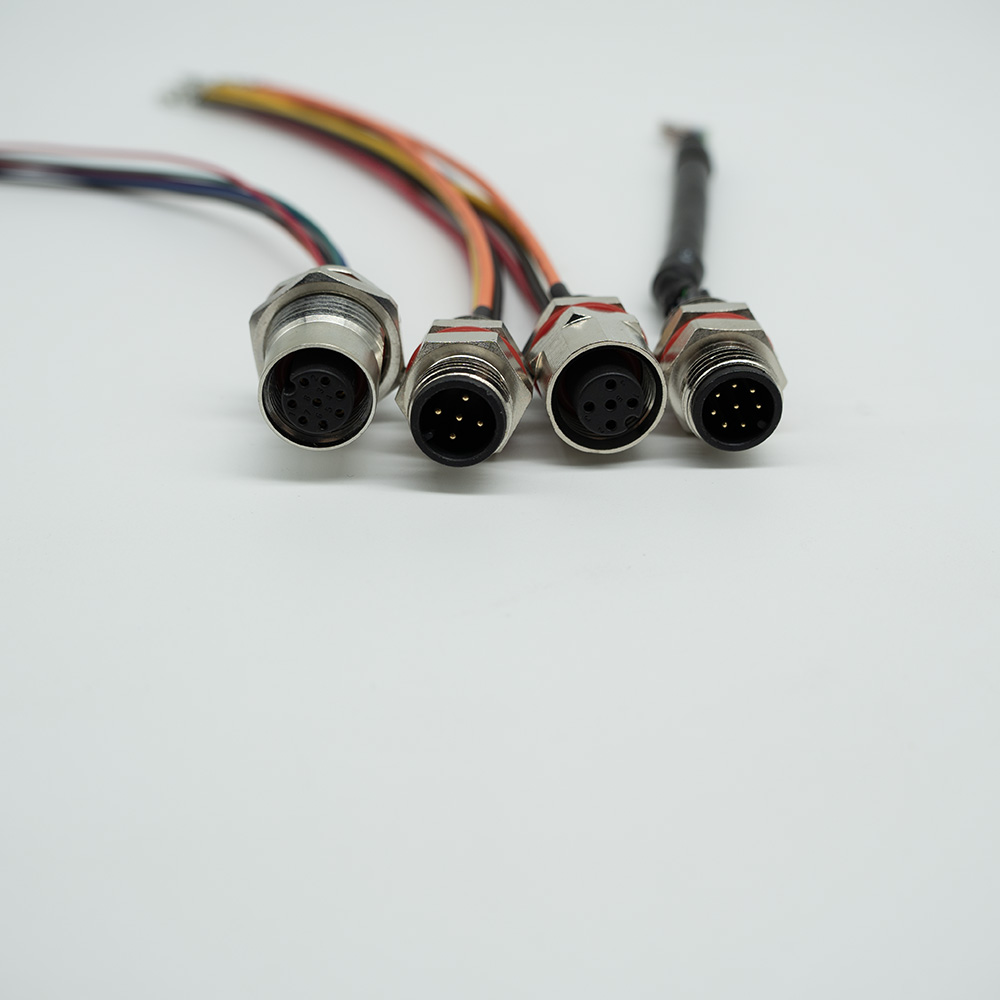
Connector failure in harsh environments carries massive operational risks. Liquid ingress causes electrical shorts, signal degradation, and catastrophic system downtime on the factory floor or in the field. Engineers and procurement teams often misunderstand Ingress Protection (IP) ratings, assuming higher numbers automatically mean better performance across all conditions. Treating IP68 as a universal standard leads to expensive over-speccing or dangerous under-speccing. Manufacturers define IP68 variables differently based on their own proprietary testing parameters. You need a technical evaluation framework to objectively compare IP67 and IP68 options. We will break down hydrostatic pressure limits, immersion durations, and specific application environments to help you choose the right waterproof connector for your next deployment.
Standardized vs. Variable: An IP67 waterproof connector is tested to a strict standard (1 meter for 30 minutes), whereas IP68 parameters (depth and duration) are defined by the individual manufacturer.
Temporary vs. Continuous: IP67 is engineered for temporary submersion and weather exposure; IP68 is required for continuous, long-term underwater operation.
Hidden Variables: A connector's IP rating is only valid when properly mated; factors like mating cycles, chemical exposure, and temperature fluctuations can compromise the waterproof seal regardless of the initial rating.
Cost-to-Risk Ratio: Upgrading to IP68 requires verifying the manufacturer's exact testing certificates to ensure the connector meets the specific hydrostatic pressure demands of the project.
Decoding the Ingress Protection (IP) Standard for Connectors
The Baseline: What "IP6X" Dust-Tight Means
Both IP67 and IP68 share the highest level of solid ingress protection. The "6" indicates complete dust-tight performance. These components are vacuum-sealed against microscopic particulates. Sand, dirt, and industrial dust cannot penetrate the housing. This baseline ensures that solid contaminants will never interfere with the electrical contacts. Achieving this rating requires tight manufacturing tolerances and high-quality elastomeric seals. Engineers rely on this baseline for any equipment deployed in outdoor or heavy industrial settings. Testing for the IP6X standard involves placing the component in a dust chamber containing circulating talcum powder while applying a vacuum to the inside of the connector. If no dust enters after eight hours, the component passes. This rigorous testing guarantees reliability in environments like mining operations, agricultural processing facilities, and cement plants where airborne particulates destroy standard electrical contacts.
Immersion vs. Direct Spray (IP65/IP66 vs. IP67/IP68)
Procurement teams often confuse spray resistance with immersion capabilities. IP65 and IP66 ratings test resistance to water jets sprayed from the outside. They survive washdowns but fail underwater. IP67 and IP68 specifically test for actual hydrostatic immersion. You must specify the latter for any submersion risk. A component rated for high-pressure spray might lack the internal pressure equalization needed to survive being dropped in a puddle. Understanding this distinction prevents immediate field failures. For example, a food processing plant might require IP69K for high-temperature, high-pressure washdowns, but a sump pump operating in a drainage pit requires IP68. Dynamic pressure from a water jet impacts the housing differently than the static, omnidirectional pressure of hydrostatic immersion. Specifying the wrong protection type guarantees fluid ingress and subsequent electrical failure.
The Liquid Variable: "7" vs. "8"
The second digit defines structural testing protocols. A "7" indicates temporary immersion capabilities. An "8" signifies continuous submersion endurance. This single digit dictates whether a system survives a temporary flood or operates permanently underwater. The engineering required to move from a 7 to an 8 involves completely different sealing philosophies. It shifts the focus from simple O-ring compression to advanced potting and hermetic sealing techniques. A level 7 rating relies on the physical compression of rubber gaskets between mating surfaces. A level 8 rating often abandons removable gaskets in favor of permanent epoxy potting, overmolded cable assemblies, and glass-to-metal hermetic seals that physically bond the conductive pins to the outer housing. This structural difference dictates the operational limits of the hardware in the field.
IP67 Waterproof Connector: Capabilities and Limitations
Standardized Testing Parameters
The IEC 60529 standard defines strict testing conditions for an IP67 waterproof connector. Technicians submerge the mated component in static water. The depth reaches exactly one meter, measured from the bottom of the device. The test lasts precisely 30 minutes. Furthermore, the standard dictates that the water temperature must not differ from the equipment temperature by more than 5 Kelvin. If the internal contacts remain dry, the component passes. This standardization makes IP67 highly predictable. You know exactly what environmental stress the component can handle out of the box. There is no ambiguity in the testing parameters. Engineers can confidently specify these components for applications where exposure to water is accidental, temporary, or limited to heavy rainfall rather than intentional submersion.
Ideal Use Cases
Map these capabilities to real-world applications. Outdoor telecom enclosures exposed to heavy rain rely on this rating. Standard outdoor equipment and lighting fixtures use them effectively. Industrial machinery subject to occasional washdowns benefits from this protection. They also survive temporary flooding scenarios in field installations. Solar panel arrays and wind turbine sensors frequently utilize IP67 components. They provide robust protection against severe weather without over-engineering the connection point. Agricultural machinery, such as tractors and combine harvesters, utilize these connections for their external sensor networks. The rating ensures that driving through deep mud or leaving the equipment out in a torrential downpour will not short out the CAN bus communication lines. It provides the perfect balance of environmental protection and mechanical accessibility.
Implementation Risks
You must identify failure thresholds early. These connectors will fail under high-pressure water jets. Such environments require IP69K ratings instead. They also fail if left submerged beyond the 30-minute mark. Hydrostatic pressure eventually overcomes standard elastomeric seals. Water creeps into the contact chamber and causes shorts. Capillary action can then draw this moisture straight into the main equipment housing. Knowing these limits prevents catastrophic system damage during prolonged flood events. If a junction box sits in a low-lying area prone to standing water that takes days to drain, an IP67 rating is insufficient. The continuous pressure will slowly deform the O-rings, allowing microscopic amounts of moisture to enter. Over time, this moisture causes galvanic corrosion on the pins, leading to increased electrical resistance and eventual signal loss.
IP68 Waterproof Connector: The "Continuous Immersion" Variable
Why IP68 is Not a Universal Standard
Engineers often assume IP68 guarantees infinite underwater survival. This is a critical caveat. The standard dictates protection must exceed the baseline of IP67. However, the actual extended depth and duration are strictly specified by the manufacturer. One brand might test at two meters for 24 hours. Another might test at 50 meters for ten years. You cannot swap two IP68 components blindly. You must read the specific engineering datasheets to understand the true immersion limits. A component designed for a shallow decorative fountain will carry an IP68 rating, just like a component designed for a deep-sea remotely operated vehicle (ROV). If you install the fountain component on the ROV, it will implode instantly. Always verify the exact depth and duration parameters listed on the manufacturer's technical specification sheet before approving the part for procurement.
Hydrostatic Pressure Considerations
Water depth directly correlates with hydrostatic pressure. Every additional meter increases the pressure exerted on the housing. Ten meters of depth equals roughly one bar (14.5 PSI) of pressure. An IP68 waterproof connector utilizes advanced engineering to resist this continuous pressure. Manufacturers deploy specialized potting compounds. They use overmolding techniques and heavy-duty O-rings to prevent fluid ingress under high pressure. The internal geometry is designed to eliminate air pockets. This prevents the housing from collapsing inward as depth increases. Solid potting materials like polyurethane or epoxy fill the voids around the solder joints. This solid mass transfers the external hydrostatic pressure evenly, preventing the mechanical deformation of the outer shell. Without this internal support, the pressure at 50 meters would crush a standard hollow connector shell.
Ideal Use Cases
Applications requiring continuous submersion demand this rating. Deep-water marine equipment relies heavily on these robust seals. Continuous underwater sensors and subsea robotics require absolute fluid barriers. Long-term agricultural soil sensors also depend on them to survive seasonal waterlogging. Aquaculture monitoring systems use them to maintain power and data transmission in corrosive saltwater environments. Any scenario where retrieving the equipment is difficult or impossible requires true IP68 protection. Municipal water treatment plants utilize these connections for sensors mounted at the bottom of aeration tanks. Swimming pool lighting systems require them to ensure swimmer safety. In these applications, the cost of retrieving, repairing, and redeploying a failed component far exceeds the initial premium paid for a properly rated continuous-immersion connection.
Head-to-Head Technical Evaluation: IP67 vs. IP68
Depth and Duration Thresholds
Comparing these ratings requires a clear look at performance limits. The strict one-meter, 30-minute rule contrasts sharply with variable manufacturer specifications. Visualizing these differences helps clarify the engineering requirements for your specific project. You must align the physical realities of your deployment environment with the certified testing limits of the hardware.
Technical Parameter
IP67 Specification
IP68 Specification
Testing Standard Authority
IEC 60529 (Strictly Defined)
IEC 60529 (Manufacturer Defined)
Maximum Submersion Depth
Exactly 1 meter
Greater than 1 meter (Varies widely)
Maximum Submersion Duration
Exactly 30 minutes
Continuous (Varies by manufacturer spec)
Primary Field Application
Temporary flooding, heavy rain, washdowns
Continuous underwater operation, subsea
Hydrostatic Pressure Resistance
Low (approx. 1.42 PSI)
High (Scales with rated depth)
Internal Void Management
Air-filled contact chambers acceptable
Often requires epoxy potting or overmolding
Material and Sealing Technologies
Engineering differences dictate performance. IP67 typically relies on standard elastomeric seals and basic threaded couplings. These seals compress to form a physical barrier. IP68 often requires multi-stage sealing mechanisms. Engineers utilize hermetic glass-to-metal seals for extreme depths. Specialized epoxy potting fills internal air gaps to eliminate pressure differentials. Cable glands on IP68 models feature extended strain relief to prevent cable flexing from breaking the waterproof barrier over time. The choice of O-ring material also shifts. While standard NBR (Nitrile) might suffice for temporary exposure, continuous submersion often requires FKM (Viton) or specialized silicone blends that resist long-term degradation and maintain their elasticity under constant hydrostatic load.
Cost-to-Performance Trade-offs
Specifying IP68 impacts project budgets. You must analyze the financial justification carefully. The premium cost is justified when system failure carries severe safety or operational risks. If your equipment only faces occasional rain or shallow puddles, an IP67 component provides sufficient return on investment and reliable protection. Over-speccing drains resources unnecessarily. Under-speccing leads to rapid equipment failure. Balance the environmental reality against the engineering requirements to optimize your build. Consider the labor cost of replacement. If a sensor is buried under concrete or submerged in a toxic chemical tank, the labor to replace a failed connection justifies the highest possible ingress protection rating from day one.
Evaluating M12 Waterproof Connectors in Industrial Applications
The Role of M12 in Harsh Environments
The M12 waterproof connector serves as the industry standard for factory automation. Robotics and complex sensor networks rely on its rugged circular design. The threaded locking mechanism ensures secure mating under heavy vibration. The standardized keying options (A-coded, B-coded, D-coded, X-coded) prevent incorrect mating on busy assembly lines. These components handle both power and high-speed data transmission simultaneously, supporting protocols like Profinet and EtherCAT. Their compact footprint makes them ideal for crowded control panels and distributed I/O blocks mounted directly on the machinery. The metal knurl allows technicians to achieve the proper torque specification by hand, ensuring the internal O-ring compresses exactly as designed by the manufacturer.
Specifying M12: When to Upgrade
Choose your rating based on specific factory floor zones. A standard assembly line exposed to ambient moisture operates perfectly with IP67. Continuous fluid immersion tanks require an immediate upgrade to IP68. Evaluate the specific fluid dynamics of each installation zone before specifying the component. Consider the presence of cutting fluids or industrial lubricants. These substances require specialized seal materials alongside the appropriate IP rating. A standard rubber O-ring will swell and fail if exposed to synthetic machining coolants, regardless of whether it is rated IP67 or IP68. You must match the chemical compatibility of the seal material to the specific fluids present in the manufacturing environment.
Beyond the IP Rating: Hidden Failure Points in Waterproof Connectors
The Unmated Vulnerability
Many assume components remain waterproof when disconnected. This is a dangerous misconception. Exposed contacts invite immediate corrosion and moisture ingress. You must use IP-rated dust caps. Alternatively, specify engineered hermetic receptacles to protect the system when unmated. A single drop of water on an exposed pin can cause a dead short upon remating. Always plan for the unmated state during your system design phase. Dummy plugs provide a physical barrier and compress the seals just like a live cable would. Leaving a panel-mount receptacle open to the elements during maintenance windows is a primary cause of premature failure in field deployments.
Mating Cycles and Seal Degradation
IP ratings apply to static, newly mated states. Real-world applications involve repeated connecting and disconnecting. This mechanical action degrades O-rings over time. Friction wears down the elastomeric material. The effective IP rating lowers significantly after hundreds of mating cycles. Dirt trapped in the threads acts as an abrasive. You must inspect and replace seals regularly if the connection is frequently cycled during normal operations. A component rated for 500 mating cycles will not maintain its factory IP rating on cycle 501. Implement a strict maintenance schedule to replace worn cables and panel mounts before the mechanical wear compromises the environmental seal.
Chemical Exposure and UV Resistance
IP ratings only test for pure water ingress. Industrial environments introduce harsh chemicals. Exposure to oils, solvents, or UV radiation embrittles rubber seals. A degraded seal causes even a high-end component to fail prematurely. Always verify material compatibility alongside the IP rating. Polyurethane (PUR) cables offer excellent oil resistance compared to standard PVC. Stainless steel housings prevent galvanic corrosion in marine environments. The IP rating means nothing if the housing material dissolves. Direct sunlight breaks down standard plastics, causing micro-cracks in the housing that allow water to bypass the primary seals during the next rainstorm.
Temperature Cycling and Condensation
Extreme temperature changes create a "breathing" effect. Heating expands internal air. Sudden cooling creates an internal vacuum. This vacuum draws moisture past intact seals. Standard IP testing does not account for this condensation risk. Use pressure-equalizing vents or fully potted housings to mitigate this failure mode. This is especially critical for outdoor enclosures that bake in the sun and cool rapidly during rainstorms. When the cold rain hits the hot metal housing, the internal pressure drops instantly. If the connector is not fully potted, this vacuum will suck water straight through the threads and past the O-ring, flooding the contact chamber from the inside out.
Procurement and Specification Framework
Defining Success Criteria for Your Application
Engineers must define exact operational parameters before purchasing. Use this technical criteria checklist to guide your selection process and ensure long-term reliability in the field.
Calculate the maximum required submersion depth in meters.
Determine the exact duration of expected submersion (minutes, days, or permanent).
Identify the specific fluid type, chemical composition, and pH level.
Map the operating temperature range and daily thermal cycling frequency.
Assess the mechanical stress, cable flex, and ambient vibration levels.
Estimate the required number of lifetime mating cycles for maintenance.
Determine the required data transmission speed and power load.
Verifying Manufacturer Testing Data
Never accept an IP68 claim at face value. Instruct your buyers to request specific test certificates from the manufacturer. You must verify the exact depth and time parameters tested. Confirm the testing environment matches your actual field conditions. Look for independent laboratory verification. Review the material safety data sheets for the O-rings and housing plastics. Thorough verification prevents costly field failures and ensures long-term system reliability. If a supplier cannot produce the engineering test report detailing the exact hydrostatic pressure applied during their IP68 certification process, disqualify that component from your procurement list immediately.
Conclusion
Audit the specific environmental demands, thermal cycling, and fluid exposure risks of your project before selecting a rating.
Request detailed IP68 test parameters, depth limits, and material certificates directly from your suppliers.
Order physical samples and subject them to rigorous environmental chamber testing that mimics your exact field conditions.
Implement strict mating cycle tracking and preventative maintenance schedules for all critical underwater infrastructure.
Specify and install appropriate IP-rated dust caps or dummy plugs for all unmated receptacles to prevent contact corrosion.
FAQ
Q: What is the difference between IP65 and IP67/IP68 waterproof connectors?
A: IP65 tests for resistance to low-pressure water jets sprayed from the outside. It does not survive submersion. IP67 and IP68 test for actual hydrostatic immersion. You must use IP67 or IP68 if your equipment risks falling into water or operating submerged.
Q: Can an IP67 waterproof connector be used underwater?
A: Yes, but only temporarily. The standard certifies it for submersion up to one meter deep for exactly 30 minutes. It will fail if left underwater longer or pushed to greater depths due to increasing hydrostatic pressure.
Q: Does IP68 mean a connector is completely waterproof at any depth?
A: No. The IP68 standard requires it to exceed IP67 capabilities, but the exact depth and duration are defined by the manufacturer. You must check the specific testing certificate to know the actual depth limits.
Q: Is an IP68 waterproof connector also rated for high-pressure washdowns (IP69K)?
A: Not automatically. IP68 tests for static continuous immersion. IP69K tests for high-temperature, high-pressure water jets. A component can be rated for deep water (IP68) but fail under a concentrated pressure washer blast unless specifically rated for both.
Q: How do mating cycles affect the IP rating of an M12 waterproof connector?
A: Repeated connecting and disconnecting physically wears down the internal O-rings and seals. While a new connector meets its IP rating, excessive mating cycles degrade the elastomeric materials, eventually compromising the waterproof barrier.
Q: What happens if an IP67 connector is submerged longer than 30 minutes?
A: Hydrostatic pressure will eventually overcome the standard seals. Water will bypass the O-rings, enter the contact chamber, and cause electrical shorts, corrosion, and total system failure.
Q: Do waterproof connectors maintain their IP rating when unmated?
A: Generally, no. Most connectors only achieve their IP rating when fully and properly mated. When disconnected, the contacts are exposed to moisture. You must use IP-rated dust caps to protect unmated receptacles.