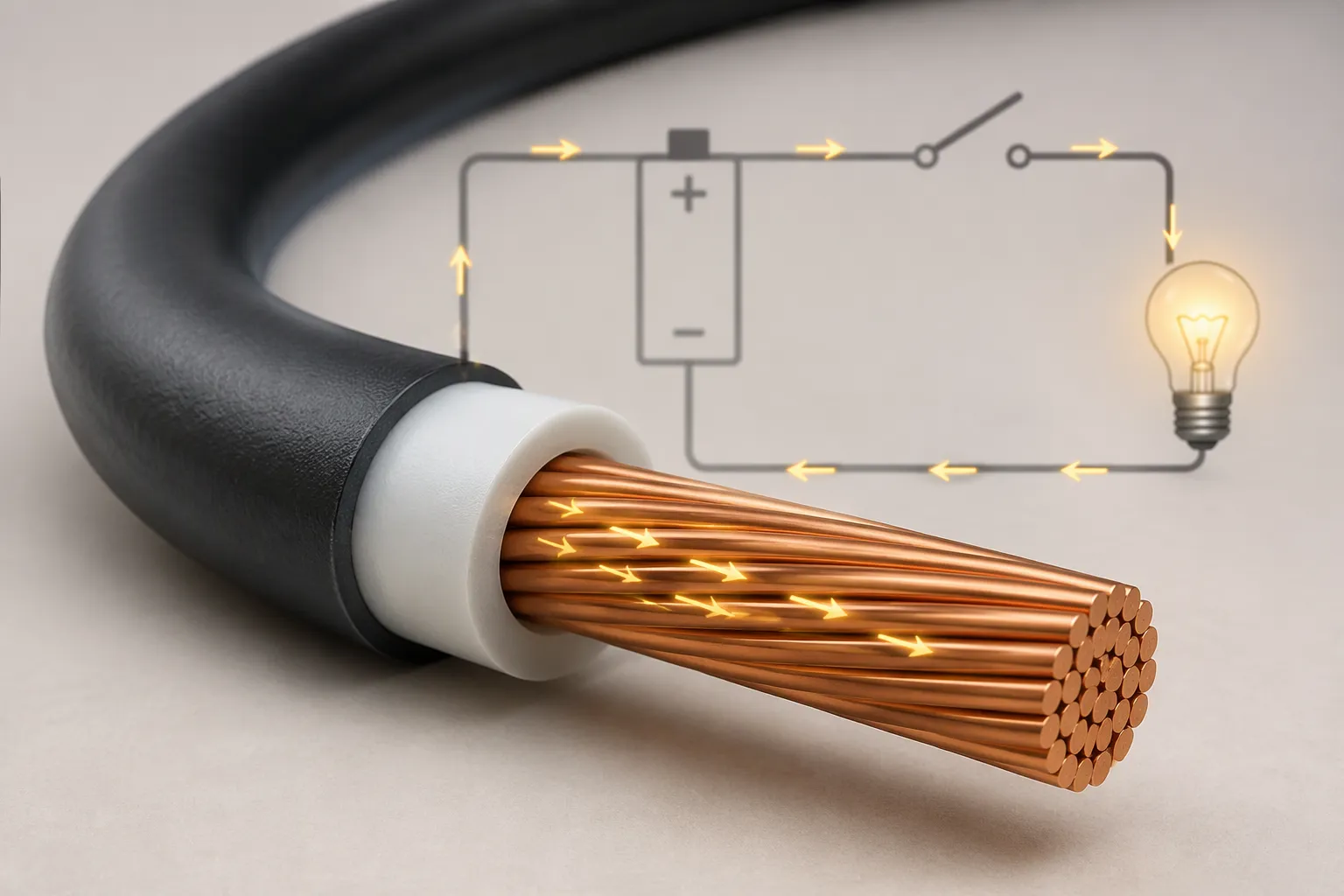
You plug in a lamp, a phone charger, or a coffee maker. The cord that makes it work is a power cable. Simply put, a power cable is a group of one or more conductors wrapped in protective layers. It carries electricity from a power source to a device. Think of a garden hose. Water flows through the tube, and the walls keep it contained. Electricity moves the same way through a cable. You will find many power cable types, and each one fits a different job. Reputable suppliers, including any custom wire harness manufacturer, build these assemblies to order. A custom wire harness simply groups wires for a specific setup.
Key Takeaways
A power cable carries electricity from a source to a device using metal conductors and protective layers.
Electricity needs a full loop to flow, so a broken circuit stops the current right away.
Materials like copper carry the electric current, and materials like rubber keep it safely inside the wire.
Pick a cable that fits your job by matching its voltage rating, plug type, and environment.
Good insulation and tight connections keep electricity on the safe path and stop accidents.
What Is a Power Cable?
A Simple Definition
A power cable is a set of one or more electrical conductors and protective layers. It carries electrical power from a source to equipment. That one sentence sums up the whole idea. The conductors sit in the center and give electricity a clear path to travel. The insulation and outer layers wrap around that path and keep it contained.
You can think of the job as two halves. The metal core does the moving. The protective layers do the guarding. Together they let a cable move electrical power across a room, a building, or a job site. This happens without exposing anyone to live metal. Power cables exist to transmit and distribute electric energy. That purpose shapes every design choice you will read about later.
Power Cord vs. Power Cable
People often use these two terms the same way, and everyday speech rarely draws a hard line. Still, there is a useful difference. A power cord, also called a line cord or mains cable, usually connects an appliance to the mains supply through a wall socket. It typically has a plug on one end and a connector on the other. A power cable more often means the wiring inside fixed installations, such as buildings, machinery, or underground runs.
Feature
Power Cord
Power Cable
Main purpose
Connect equipment to a power source
Transfer power through electrical systems
Flexibility
Highly flexible
Usually less flexible
Installation
Portable or removable
Often permanent
Connectors
Usually included
May not include connectors
Common uses
Appliances, computers, equipment
Buildings, machinery, power networks
A real product can blur the line. The Suyi Power Cable line, for example, includes custom indoor and outdoor power plug and socket extension cords. These assemblies link a power source to a device through a chosen plug and socket arrangement. That makes them a good example of how one product family can serve as the bridge between power source and equipment.
How Electricity Works in a Power Cable
A power cable works by giving electrical current an easy path to follow. The metal wire core inside the cable carries the current well. That simple setup explains how electricity works in almost every cord you own. You do not need a physics degree to grasp it. You only need a clear picture of what moves and what holds it in place.
Conductors and Insulators
Two materials do all the work here. Conductors and insulators play opposite roles, and each one needs the other. A conductor carries the current. Metals such as copper and aluminum hold loosely bound electrons, so a push from a power source sets those electrons in motion. An insulator does the guarding. Rubber, plastic, and similar materials hold their electrons tightly. They block the flow of electrons and keep the electrical current inside the wire.
Think of water in a garden hose again. The water moves through the tube, and the tube walls keep it from spilling onto the lawn. Conductors and insulators follow the same logic. The metal core is the tube. The insulation is the wall. This pairing is the heart of how electricity works in any cable. Conductors and insulators also shape how electricity works in fixed wiring, appliance cords, and extension leads alike.
The Path of Current
Electricity needs a complete loop. A closed circuit gives electrons a round trip: out from the source, through the device, and back again. Break that loop, and the current stops at once. This is why a switch works. It opens the circuit on purpose.
Here is the sequence in plain terms:
A power source pushes electrons through the conductor.
The flow of electrons moves along the wire toward the device.
The device uses the energy and sends the electrons back along a second path.
The circuit closes, and the current keeps moving.
That loop is an electrical circuit in its simplest form. Every cable you plug in supports this same pattern. The flow of electrons depends on a complete path, so a cut wire or a loose plug stops everything downstream. Understanding how electricity works means understanding this loop. The flow of electrons is not a one-way spill. It is a circuit, and a circuit must close.
A single electron drifts slowly along the wire. The push itself travels fast. That is how electricity works in practice: the energy arrives almost instantly, even though each electron moves at a crawl. The flow of electrons carries energy, and the circuit delivers it. Once you see the loop, how electricity works stops feeling mysterious. The flow of electrons simply follows the path you provide.
The Main Parts of a Power Cable
Conductor and Insulation
The conductor is the metal core that carries the electric current. Copper and aluminum work well here because their electrons move freely when the source pushes them. Stranded conductors bend easily, so they work well in cords and flexible runs. Solid conductors keep a fixed shape, so they fit permanent wiring inside walls and machines.
Insulation is the layer that keeps that energy where it belongs. Putting an insulator around the conductor traps the electron flow inside the metal. Rubber and plastic hold their electrons tightly, so they resist the current. This pairing of conductors and insulators is the base of every safe design. A bare wire invites a short circuit. A wire with good insulation keeps the circuit closed and predictable.
Shielding and Sheath
A shielding layer is a conductive metal or semi-conductive layer placed outside the conductor and insulation. It is the key part for meeting electromagnetic compatibility standards and reducing electromagnetic interference. Do not mix it up with armor or the outer sheath. Those layers handle physical protection against crushing, pulling, friction, and corrosion. The shield handles electromagnetic isolation and electric field control.
A shield does four jobs:
It resists outside interference and keeps the signal steady.
It blocks internal radiation and stops crosstalk with nearby circuits.
It evens out the internal electric field and slows insulation aging.
It carries static leakage away and raises overall circuit safety.
On high-voltage power cable designs, a semi-conductive shield fills tiny gaps between conductor and insulation. That step removes trapped air and spreads the electric field evenly, which avoids partial discharge. The result can extend cable service life by more than 30 percent. Grounding matters too. IEEE 422 and 525 list cable lengths that keep shield potential at or below 25 volts for single-point grounding. Above that, a long shield run can rise to dangerous voltages during a fault.
Types of Power Cables
You will run into many power cables in everyday life, and each one is made for a different job. Sorting them by voltage and by conductor material makes the choice much easier. Both views matter, and neither one tells the whole story by itself.
Types by Voltage and Use
Voltage tells you where a cable belongs. The table below groups power cables by their rating and typical use.
Cable Type
Voltage Rating
Common Use
Low Voltage (LV)
Up to 1kV
Homes, small businesses, local power delivery
Medium Voltage (MV)
1kV to 35kV
Power grids, regional delivery, large infrastructure
High Voltage (HV)
Above 35kV
Long-distance transmission, industrial projects
Low voltage cables work well in homes and small shops. Medium voltage cables carry power across regional grids and large sites. High voltage cables move electricity over long distances. Each tier pushes electrons with a different force, so the insulation must match the voltage. A cable built for one tier does not belong in another.
Plug types add another layer of choice. The Suyi Power Cable range covers US, EU, UK, and other standards, with various cable gauges and lengths. Optional waterproof connectors support outdoor use. These options let one product family serve indoor and outdoor jobs.
Conductors and Materials
The conductor material shapes how electrons move and how the cable handles bending. Copper and aluminum are the two common choices.
Conductor Material
Key Properties
Applications
Copper
Most common; excellent electrical conductivity; available in single and double wire varieties, with double wires being more flexible and more fatigue resistant
Applications requiring frequent bending
Aluminum
Lightweight and lower cost; not as conductive as copper but has a lower density
Some applications such as overhead transmission lines
A copper cable carries current with little resistance, so electrons flow easily. Double wire copper designs bend again and again without tiring. Aluminum weighs less and costs less, which suits overhead runs where weight matters. Both materials work well, and each fits its own setting.
You will also see cables and wires sold in fixed and flexible forms. Flexible cords suit tools and appliances. Fixed runs suit walls and machines. Match the conductor, the voltage tier, and the plug to the job, and the cable will do its work quietly for years.
How to Choose a Power Cable
Match the Cable to the Job
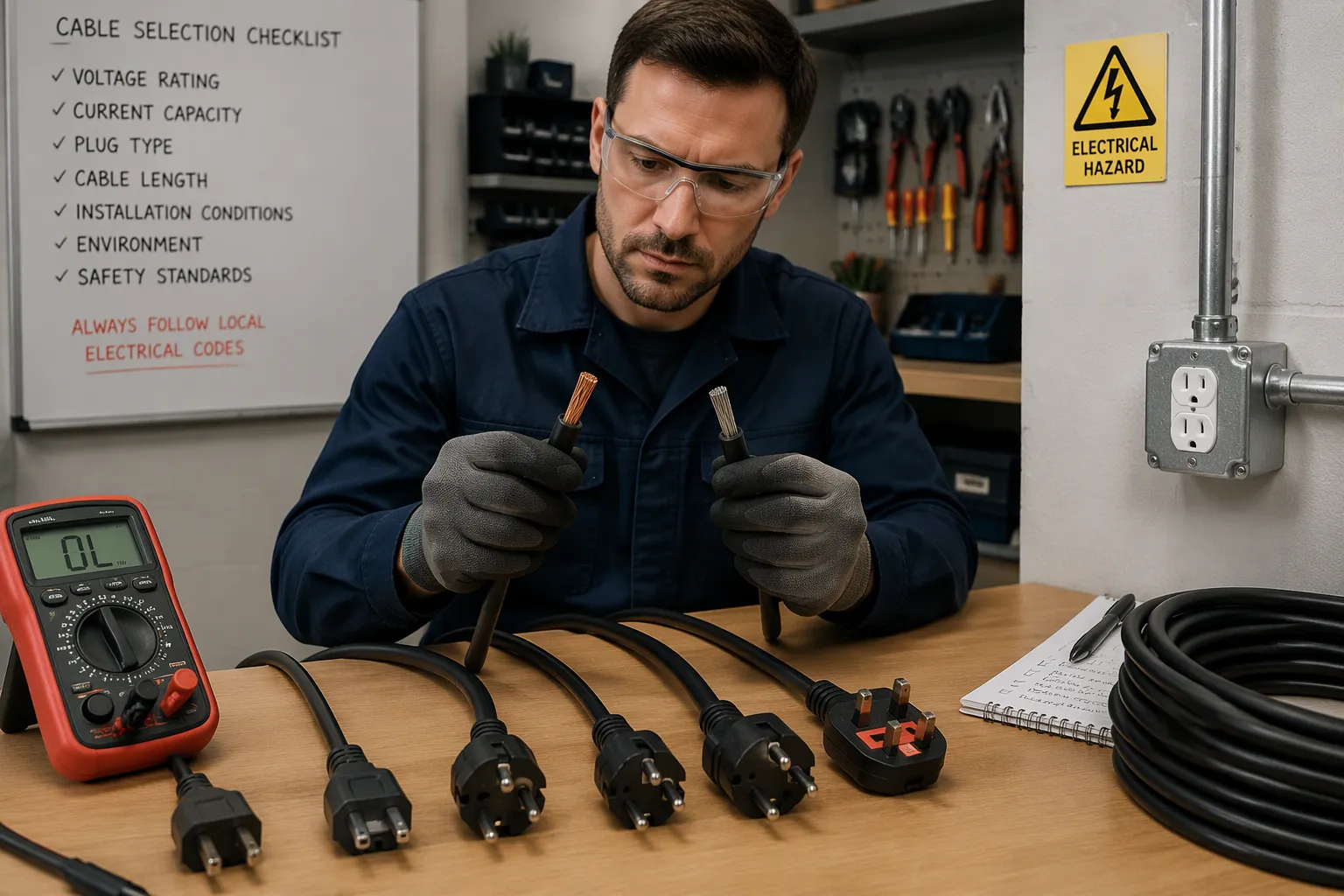
Begin with the job, not the price. A cable that works for one task may fail at another. First, check the voltage and current ratings against your equipment. Then confirm the plug type, the length, and the environment. The Suyi Power Cable range covers US, EU, UK, and other standards, so you can match the plug to the socket.
Installation conditions matter too. A cable that meets every electrical requirement may still not fit a conduit route. Larger conductors add diameter and weight, and that makes pulling harder. Decide this before manufacturing, not after delivery. Compare power cables on fit, not on price alone.
Safety and Cost
Safety and cost move in the same direction once you see the whole picture. Power cables cost more than overhead lines, yet urban areas often choose them for safety. Losses inside the cable also matter. Metal sheaths, armor, hysteresis, and conductor losses make heat, and that heat can cause failure. Researchers work to pick the best cross-section area for the lowest cost.
Factor
What to weigh
Over-specification
Extra requirements raise cost without improving reliability
Copper vs. aluminum
Copper conducts better; aluminum is lighter and cheaper
Insulation
Match the insulation to real electrical and environmental stress
Environmental protection
Add rodent or termite measures only for real exposure
Lifecycle cost
Count installation, losses, and maintenance, not just price
Over-specification is a common trap. Requirements borrowed from unrelated jobs, required materials, or extra testing all add expense. They can also shrink the supplier pool and make lead times longer.
Think about the circuit as a whole. Every joint in the circuit must stay tight. A loose plug lets electrons jump and make heat. A cracked jacket lets electrons reach the frame of a device. Inspect the wire before you install it. A sound circuit keeps electrons on the path you planned. Test the circuit after installation. If electrons find another route, the circuit fails. A closed circuit with clean connections keeps electrons where they belong. Many power cables fail early for this reason. The electrical current follows that path, and a power source pushes electrons through it. Watch the supply voltage, and check the wire gauge against it. Electrons do not care about price. They follow the circuit you give them. Give them a clean path, and they stay put. Give them a weak path, and they stray.
A power cable is a set of conductors wrapped in protective layers. A power source pushes electrons through the metal core. The insulation keeps those electrons inside the wire. The shield blocks interference, and the sheath guards against physical harm. Low voltage cables serve homes, medium voltage cables serve regional grids, and high voltage cables carry power over long distances. Choose by application fit, technical performance, regulatory compliance, and cost. Match the plug, the gauge, and the environment to the job. So what is a power cable? It is simply the safe path that lets electrons travel from a source to your device.
FAQ
What does a power cable actually do?
A power cable moves electricity from a source to a device. The metal conductors inside give electrons a clear path to follow. Protective layers keep those electrons from getting out. That simple pairing does the whole job, and it is why power cables sit behind almost every device you plug in.
Why does insulation matter so much?
Insulation keeps the current inside the wire. Without it, electrons could reach a device's frame or your hand. Rubber and plastic resist electron flow, so they work like the wall of a hose. Good insulation keeps the electrical circuit predictable and safe.
How is a power cord different from a power cable?
A power cord usually links an appliance to a wall socket, with a plug on one end and a connector on the other. A power cable more often means fixed wiring inside buildings or machines. Everyday speech blends the two terms, and power cables and cords often do the same basic job.
How do I pick the right cable for my job?
Start with the voltage and current ratings of your equipment. Then match the plug type, length, and environment. Check that the cable suits indoor or outdoor use. Understanding how electricity works helps here, because a mismatched cable puts stress on the whole setup.
What keeps a cable safe to use?
A complete loop keeps electrons moving where you plan. A loose plug or cracked jacket breaks that closed circuit and lets electrons stray. Inspect the wire before you install it. Understanding how electricity works in circuits helps you spot a weak path early. Well-made power cables protect that path.