You see waterproof connectors in cars, farms, and lights. These connectors use thermoplastics, metals, and elastomers. They work well in tough places. Many connectors have high IP ratings like IP68 and IP69K. This means they keep out water and dust in hard conditions. The material you pick helps the connector last longer and stay dry. Some connectors have fillers like silicone, grease, or petroleum. These fillers stop moisture from getting in. They also make it easier to install by skipping extra sealing.
More industries want higher IP ratings now. They need good connectors for smart devices and small equipment.
Key Takeaways
Waterproof connectors are made from thermoplastics, metals, and elastomers. These materials help keep devices safe from water and dust.
Look at the IP rating of connectors. Higher ratings like IP68 give better protection from water and dirt.
Pick materials that fit the environment. For outdoor use, choose thermoplastics or stainless steel. These materials can handle sunlight and chemicals.
Think about how strong the connectors are. Strong materials stop rust and damage. This helps the connectors last longer.
Use connectors with seals or fillers inside for more protection. These features help block moisture and changes in temperature.
Waterproof connectors: Materials
Waterproof connectors use special materials to stop water. This helps your devices work in hard places. You can find these connectors in cars, farms, and outdoor lights. Each material has its own good points. The main types are thermoplastics, metals, and elastomers. The table below shows what makes each material special:
Material Type | Defining Characteristics |
Thermoplastics | Good resistance to chemicals and UV exposure |
Metals | Excellent conductivity |
Elastomers | Flexibility and strong sealing capabilities |
Thermoplastics
Thermoplastics are used a lot in waterproof connectors. They work well in tough weather. High-quality thermoplastics keep out water, heat, and sunlight. This makes them great for cars and outdoor things. For example, Weather Pack connectors use thermoplastics to block water and dirt. These connectors work in cars, tractors, and machines that get wet or muddy. Thermoplastics help connectors last longer and work in changing weather.
Thermoplastics protect against chemicals and sunlight.
They make connectors light and easy to use.
You can get them in kits with different pins for many jobs.
Metals
Metals make waterproof connectors strong and let electricity pass through. You see metals like tin, gold, silver, and rhodium in these connectors. Each metal does something special:
Tin makes a shield and helps with soldering.
Gold does not rust and works in tough places.
Silver carries lots of electricity but can turn dark.
Rhodium stays hard and keeps a good connection.
Makers use metal coatings to stop rust and damage. For example, aluminum with gold or cadmium is used in planes and army gear. Stainless steel lasts long and stands up to bad weather. The table below shows how metals work:
Metal Type | Corrosion Resistance | Mechanical Properties | Applications |
Aluminum alloy with gold plating | Excellent; immune to attacks | Good strength-to-weight; stable coating | Aerospace, high-temp, high-humidity |
Aluminum alloy with cadmium | Resists salt spray and corrosion | Good connectivity | Military equipment |
Aluminum alloy with anodizing | Ruggedly resists corrosion and wear | Improves heat dissipation | General use in connectors |
Passivated stainless steel | High durability; good resistance | Extremely durable | Extreme operating environments |
Elastomers
Elastomers keep water out and the inside dry. You find elastomers like EPDM, butyl, silicone, Vamac, and Viton in waterproof connectors. These materials stretch and fit tight, making a strong seal.
EPDM stands up to sun, ozone, and water.
Butyl blocks gas and water, so it is good for vacuums.
Silicone handles heat and water without breaking.
The table below shows how well each elastomer keeps out water:
Elastomer | Water Resistance |
Butyl | Excellent |
EPDM | Excellent |
Silicone | Excellent |
Vamac | Excellent |
Viton | Excellent |
You see elastomer seals in connectors for watering systems, outdoor lights, and smart car parts. These seals keep water out, even in rain or mud.
Tip: Some waterproof connectors use fillers like silicone grease or petroleum-based oils. These fillers give extra protection. They fill gaps and stop water from getting in. They also help connectors work in hot or cold weather.
Waterproof connectors use these materials in different ways, depending on the job. For example, car connectors often use thermoplastics and silicone for smart parts. Watering connectors use rubber and silicone for wet dirt. Outdoor light connectors use thermoplastics and rubber to keep out rain and dust. You can pick kits with the right pins and seals for your needs.
Key Properties
Water Resistance
Water resistance is very important for waterproof connectors. You want the connector to keep water out. It should work even in heavy rain or splashes. The material and design help block water. Makers test connectors with IP ratings. These ratings show how much water the connector can handle.
Connector Type | Water Resistance Testing Method | Protection Level |
IP65 | Spraying water from a 0.25-inch nozzle at 30 kPa pressure for 15 minutes from 3 yards | Multi-directional, low-pressure water jets |
IP67 | Immersion testing at depths between 5.9 inches and 39.37 inches for up to 30 minutes | Suitable for accidental submersion or heavy rain |
Connectors with IP68 or IP69K ratings protect even better. You can use them where water, mud, or dust are common. Materials like thermoplastics and elastomers make tight seals. Silicone grease or petroleum fillers fill small gaps for extra safety. A watertight seal keeps your devices safe.
Tip: Always check the IP rating before you buy a connector. Higher numbers mean better water resistance.
Durability
Durability means the connector lasts a long time. It should handle tough conditions and not break. You want materials that resist wear and rust. Using the connector a lot can wear out the parts. Metal housings with coatings like aluminum with gold or cadmium stop rust. Good plastics stand up to sunlight and chemicals.
Factor | Impact on Performance |
Mechanical stress | Frequent mating and unmating can wear contact surfaces and seals. |
Corrosion | Metal housings can rust in saltwater environments without proper coatings. |
Thermal expansion | Improper material matching can cause warping, compromising sealing during temperature fluctuations. |
Material degradation | Low-quality elastomers can crack under UV exposure or thermal cycling. |
Contaminant ingress | Dust or chemicals can penetrate due to damaged O-rings or gaskets. |
Voltage leakage | Moisture absorption by the insulation layer can reduce dielectric strength over time. |
Design flaws | Poor pressure resistance due to noncompliant thread geometry. |
Waterproof connectors are made to handle stress and last longer.
They work in harsh places, like hot or cold weather and with chemicals.
Temperature changes can cause problems if materials do not match. Plastic parts might melt or crack if they get too hot. Good design and strong materials help stop these problems. Look for connectors with strong seals and coatings to avoid rust and damage.
Note: Common problems include rust, wear, and weak force. Good materials and careful installation help lower these risks.
Electrical Insulation
Electrical insulation keeps you and your devices safe. It stops electricity from leaking out. Engineering plastics like polyethylene (PE) and polypropylene (PP) insulate well. These materials also resist rust and sunlight.
Material Type | Properties |
High-grade Plastics | Resistant to corrosion, UV radiation, and extreme temperatures. |
Metals | Stainless steel and aluminum with anti-corrosion coatings. |
Insulation Materials | Engineering plastics like PE and PP offer excellent electrical insulation. |
Housing Materials:
Insulation Materials:
A watertight seal keeps the inside dry and safe. Insulating materials help the connector work in hot or cold places. Rust resistance helps the connector last longer. Waterproof connectors use these features to keep your electrical systems safe.
Tip: Always pick connectors with good insulation and strong seals for safety.
Selection Factors
Environment
When picking connector materials, think about where you use them. Temperature changes can affect how connectors work. Chemicals and sunlight also change connectors over time. If you use connectors outside, these things matter a lot. Oil or acid can damage some materials. Very hot or cold weather can make insulators break. Humidity or water can cause leaks. Dust or metal bits can block connectors and make them stop working.
Material Type | UV Resistance | Chemical Resistance |
High-grade Plastics | Moderate damage over time | Resists many chemicals |
Metals (Stainless Steel, Aluminum) | Great resistance | Coated metals resist rust |
If you work in sunlight or near chemicals, use coated metals or strong plastics.
Mechanical Needs
Check if the connector can handle bending and pulling. Jobs in factories need connectors that stay strong and bend easily. Some materials are better for this than others.
Specification | Value |
Environmental Sealing Protection | IP65 to IP69 |
Operating Temperature Range | -55°C to 200°C |
Working Voltage | 1,600Vrms |
Proof Voltage | 5,000Vrms |
Current Rating | 25–35A per contact |
Insulation Resistance | 5GΩ |
Initial Contact Resistance | 5Ω |
Contact Retention | 45–67N |
Mating Cycles | 1,000 |
Mechanical Shock and Vibration | Handles rough use |
UV Radiation | Handles sunlight |
Salt Spray | Handles salty air |
TPU mixes rubber and plastic for good strength and bending. Silicone elastomers resist heat, cold, and getting old. These features help connectors last longer in hard places.
Cost
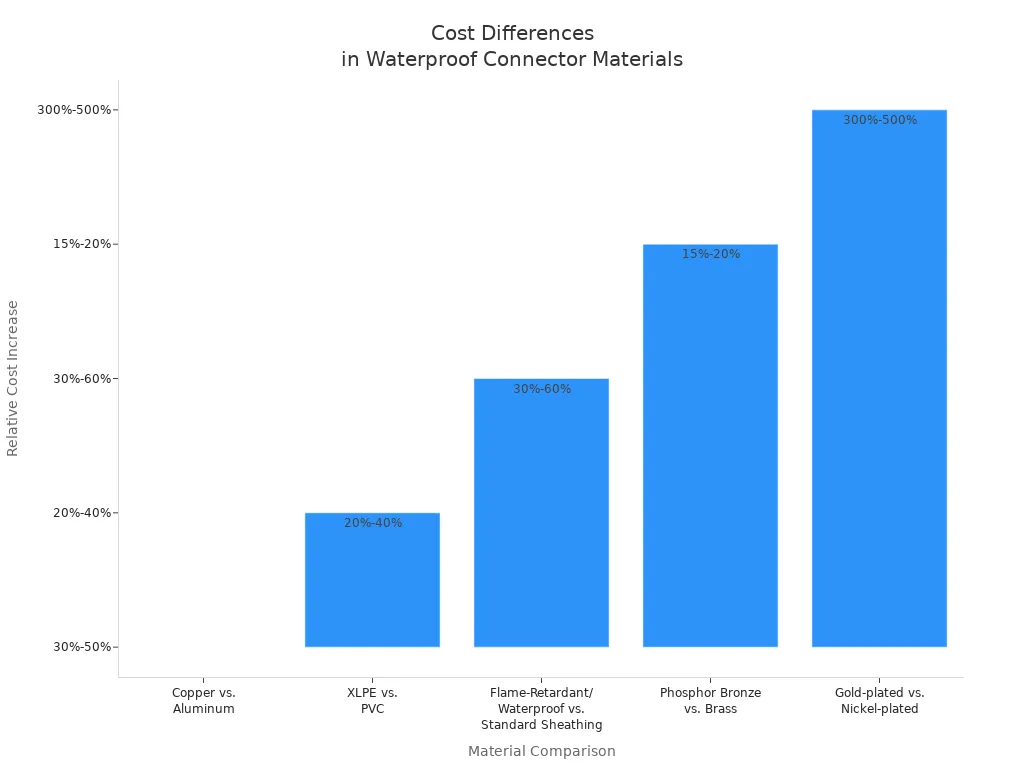
Cost is important when buying connectors for big jobs. Prices change based on what the connector is made of. Copper wires cost more than aluminum ones. Gold-plated ends cost much more than nickel-plated ends. Waterproof and fire-safe covers cost more than regular rubber.
Think about supply too. Sometimes, rules or shortages make special materials hard to find. This can slow your work and make it cost more.
Some connectors are easy to install. Push-Lock connectors let you join wires fast without tools. This saves time and lowers work costs. These connectors are good for car factories and quick fixes.
Tip: Choose connectors that fit your place, job needs, and budget. Fast-install connectors can save you time and money.
Picking the right connector material helps you do well in tough places. The table below lists top materials and what makes them good:
Material | Key Advantages | Common Uses |
Thermoplastics | Light, strong, and stands up to chemicals | Cars, outdoor lights |
Stainless Steel | Does not rust and lasts a long time | Factories, telecom |
Silicone | Bends easily and seals tight in bad weather | Outside, watering systems |
Use thermoplastics and metals that do not rust for cars.
Pick stainless steel or plastics that handle sun for outside or factory work.
Make sure the material and IP rating fit your place for best results.
Tip: Good materials and tight seals keep water and dirt out, so your connections stay safe.
FAQ
What does an IP68 rating mean for waterproof connectors?
IP68 means the connector keeps out dust and water. You can use it underwater for a long time. This rating protects your connector in wet or dirty places.
Can you use waterproof connectors outdoors?
Yes, you can use waterproof connectors outside. They stand up to rain, sunlight, and dirt. Always check the material and IP rating before installing them.
Which material lasts longest in harsh environments?
Stainless steel lasts the longest. It does not rust or break easily. Thermoplastics also work well with sunlight and chemicals. Pick the material that fits your job best.
Do you need extra sealing with waterproof connectors?
Most waterproof connectors have seals built in. You do not need extra sealing. Some use silicone grease or petroleum fillers for more protection.
How do you choose the right waterproof connector for your project?
Tip: Think about your weather, job needs, and budget. Check the IP rating and material type. Pick connectors that fit your weather, chemicals, and how you install them.