Introduction
Industrial failures do not always begin with major equipment damage. In many cases, they start at a single weak connection. The wrong Waterproof Connecting Wire can lead to corrosion, signal loss, short circuits, and costly downtime in wet, dusty, or high-vibration environments.
That is why choosing the right solution is not just a technical detail. It is a practical decision that affects safety, maintenance, and long-term performance. In this article, you will learn how to select Waterproof Connecting Wire based on environment, IP rating, electrical load, materials, and installation needs.
How to Choose Waterproof Connecting Wire: The Core Selection Criteria
Define the Industrial Environment First
The first step is to understand where the wire will work. A cable used in a dry control box has very different needs from one installed on outdoor machinery or in a washdown production line. Some sites have heavy moisture. Others have chemical spray, salt exposure, dust, UV, or constant movement. If we define the environment early, we avoid poor product selection later.
It also helps to think in terms of real working stress, not only general labels. For example, “industrial” can mean a food processing line, a port machine, a packaging system, or a sensor network in a factory. Each setting creates different risks for the Waterproof Connecting Wire. That is why application context should always come first.
Match the Required IP Rating to Real Operating Conditions
IP rating is one of the first things buyers check, but it should not be the only one. In many industrial cases, IP67 is enough for temporary water exposure and general outdoor use. IP68 is better when longer submersion is possible. IP69K becomes important in areas with hot, high-pressure washdown.
Still, a higher IP rating is not automatically the best choice. The correct rating depends on how the wire assembly is used, cleaned, and maintained. If the application only sees splashes and rain, a properly matched IP67 product may perform very well. If the system faces daily washdown, that choice may not last.
Check Electrical Load and Signal Type
Not all waterproof wire systems do the same job. Some carry motor power. Some connect sensors. Some transmit industrial Ethernet or control signals. That means buyers need to match the Waterproof Connecting Wire to the actual electrical function. A product made for low-current signal transfer may not suit higher-current power applications.
Signal quality matters too. In automation systems, unstable transmission can cause faults even when the connector still looks fine from the outside. Power, signal, and data circuits each need the right conductor size, contact design, and shielding level. This is why electrical function should be reviewed before comparing product series.
Verify Cable Size, Conductor Count, and Current Capacity
Cable size is a basic but critical factor. The conductor must handle the current safely, and the outer jacket must fit the connector sealing range correctly. If the cable is too small, the seal may not close tightly. If it is too large, installation becomes difficult or unreliable. In both cases, waterproof performance may suffer.
Conductor count also matters. Some devices need only two cores, while others need several conductors for power, signals, or communication. Buyers should match current needs and leave reasonable room for system design. A well-sized Waterproof Connecting Wire supports both electrical reliability and proper sealing.
Evaluate Temperature, UV, Oil, and Chemical Resistance
Moisture is only one part of industrial exposure. Many failures happen because the jacket or insulation breaks down under oil, sunlight, heat, or aggressive cleaning agents. This is why the material system matters as much as the connector seal. A connector can remain sealed while the cable itself ages too quickly.
For example, outdoor equipment may need UV-resistant jackets. Moving equipment may need flexible materials. Chemical areas may require compounds that resist oils or solvents. When selecting Waterproof Connecting Wire, buyers should always compare the material performance against the real plant environment.
Choose the Right Locking and Sealing Mechanism
The connector locking method strongly affects long-term reliability. Threaded connectors usually work well in vibration-heavy applications because they resist accidental loosening. Bayonet systems offer secure fastening and faster handling. Push-pull designs can improve service speed where quick access matters.
Each mechanism has value, but it should match the site condition. A fast-lock style may help during maintenance, yet it may not be the best option for equipment that shakes all day. Good sealing also depends on correct cable fit, gasket design, and connection pressure. In practice, sealing and locking should be evaluated together.
Confirm Mated vs. Unmated Waterproof Performance
One of the most common buying mistakes is assuming the waterproof rating always applies. In many connector systems, the rated protection level only exists when the connector is fully mated with the correct counterpart. Once disconnected, that protection can disappear unless a sealing cap or dust cap is used.
This point is very important in industrial maintenance. If equipment is often unplugged for service, buyers should ask whether the Waterproof Connecting Wire remains protected during unmated periods. That detail affects both product choice and maintenance planning.
Waterproof Connecting Wire Ratings and Specifications Buyers Must Understand
What IP Ratings Actually Mean for Waterproof Connecting Wire
IP ratings are useful because they provide a standard reference for dust and water protection. They help buyers compare products more quickly and set a minimum performance target. However, they only describe test conditions, not every real operating situation. A product that passes a lab test may still fail in a harsh factory if it is installed badly or used outside its intended range.
That is why IP ratings should be read in practical terms. Buyers should ask how the product behaves under movement, temperature swings, vibration, or repeated cleaning cycles. In industrial use, the number on the datasheet is important, but the application fit is even more important.
Connector Ratings vs. Full Assembly Performance
A waterproof connector alone does not guarantee a waterproof system. The full assembly includes the connector body, contacts, seals, cable jacket, strain relief, and installation quality. If one part is weak, the whole connection becomes vulnerable. For example, a high-rated connector can still fail if it is installed on an incompatible cable diameter.
This is why buyers should think in system terms. A reliable Waterproof Connecting Wire is a complete solution, not a separate collection of parts. The cable, connector, and sealing structure must work together under real industrial stress.
Current, Voltage, and Safety Margins
Industrial systems often see varying loads, start-up surges, and heat build-up. If a wire assembly is chosen too close to its rated limit, service life may drop. Good selection includes margin. That margin protects against unexpected load changes, environmental heat, and long operating hours.
It is also helpful to compare not just normal operating current, but worst-case conditions. A small cost increase at purchase can often prevent larger maintenance cost later.
Best Waterproof Connecting Wire Types for Industrial Applications
Waterproof Connecting Wire for Power Transmission
Power applications usually demand stronger cable assemblies. Motors, power supplies, control cabinets, and industrial drives need wire that handles current, heat, and mechanical stress. In these cases, conductor size, contact quality, and locking security are top priorities.
A good Waterproof Connecting Wire for power use should maintain electrical stability over long periods. It should also resist loosening and overheating under vibration or repeated operation. That is why heavy-duty connector design matters in power circuits.
Waterproof Connecting Wire for Sensors and Actuators
Sensor and actuator systems often use smaller connectors and compact cable assemblies. These applications may not carry high current, but they depend on consistent signal quality and stable mating. Even a small connection problem can affect equipment accuracy, automation timing, or device feedback.
Compact sealed connectors are common here because they fit tight equipment layouts. Buyers should check pin count, coding, sealing quality, and ease of maintenance. In many automation systems, this type of Waterproof Connecting Wire is used in large numbers, so consistency is especially valuable.
Waterproof Connecting Wire for Industrial Data and Ethernet
Data lines need more than water resistance. They also need signal integrity. Industrial environments are often full of electrical noise from motors, relays, and switching systems. That means shielded cable assemblies are often the better choice for data transmission.
When selecting Waterproof Connecting Wire for Ethernet or control communication, shielding and connector design should be reviewed carefully. A waterproof data connection should not only stay sealed, but also maintain stable communication over time. This is especially important in smart factories and automated production lines.
Inline vs. Panel-Mount vs. Field-Installable Options
The format of the wire connection affects installation and service. Inline connectors are useful for direct cable-to-cable links and flexible routing. Panel-mount connectors work well when equipment housing needs a fixed interface. Field-installable versions support on-site assembly and fast repair.
The right choice depends on the service model and machine design. If frequent maintenance is expected, easy-access formats may help reduce downtime. If the enclosure needs a clean external interface, panel-mount solutions may be the better option. Buyers should match the product format to how the system is built and maintained.
Materials and Construction Features That Improve Waterproof Connecting Wire Performance
Jacket and Insulation Materials
Material choice shapes durability. PVC is common and cost-effective in many standard applications. XLPE can offer better thermal performance. Rubber-based materials may help in flexible installations. TPU can provide strength where abrasion resistance matters. Each has value, but each fits different conditions.
When selecting Waterproof Connecting Wire, buyers should compare the material against moisture, heat, flexing, UV, and chemical exposure. A cable that looks strong on paper may still fail early if the jacket does not suit the plant environment.
Contact Materials and Plating
Contact plating affects both conductivity and corrosion resistance. Tin-plated contacts are widely used and economical. Gold-plated contacts often perform better in harsh environments or low-level signal systems. The right choice depends on the application, not only on budget.
In wet or corrosive settings, contact quality deserves close review. Stable contact performance helps prevent voltage drop, signal problems, and long-term maintenance issues. For many industrial buyers, this small detail can make a big difference over the full service life.
Shielding for EMI/RFI Protection
Shielding becomes important in environments filled with electrical interference. Motors, drives, and switching equipment can all affect nearby communication lines. If the application includes data or sensitive signals, shielding may be necessary for stable performance.
A shielded Waterproof Connecting Wire can improve signal reliability, but only if the connector design supports effective shielding continuity. That is why buyers should review the full assembly design, not only the cable itself.
Strain Relief, Grommets, and Sealing Components
Small parts often decide real-world durability. Strain relief protects the cable from pull stress and bending near the termination point. Grommets help center the cable and keep the seal tight. O-rings and sealing inserts block moisture paths that might seem minor at first.
These parts may not attract much attention in a catalog, yet they often separate reliable assemblies from short-life products. Industrial buyers should look closely at these construction details before making a final selection.
How to Compare Waterproof Connecting Wire Options Without Guesswork
Compare by Application, Not Just Product Label
The word “waterproof” can mean many things in the market. Some products are built for outdoor consumer use. Others are designed for industrial washdown, vibration, and chemical exposure. That is why product labels alone are not enough for serious comparison.
Buyers should compare options against the exact use case. They should ask where the cable will run, how often it will move, how it will be cleaned, and what electrical load it will carry. This method produces a much more accurate decision than simply comparing names or price points.
Compare Lifecycle Cost Instead of Purchase Price
Purchase cost is important, but it should not drive the entire decision. A cheaper Waterproof Connecting Wire may lead to more downtime, faster replacement, and more labor. In industrial settings, one service interruption can cost more than the savings from buying a lower-grade product.
Lifecycle thinking gives a better view. It includes installation time, replacement rate, inspection needs, and failure cost. For B2B procurement, this approach usually leads to stronger and more cost-effective choices.
Evaluate Supplier Documentation and Datasheets
Good documentation helps reduce buying risk. Buyers should review IP conditions, operating temperature, current and voltage limits, mating cycle life, material details, and cable size compatibility. If this information is missing or unclear, the product should be reviewed more carefully.
It is also wise to ask how the rating was tested and whether it applies to the exact assembly configuration being purchased. Strong suppliers usually provide clearer technical support, and that can help buyers avoid expensive mismatches later.
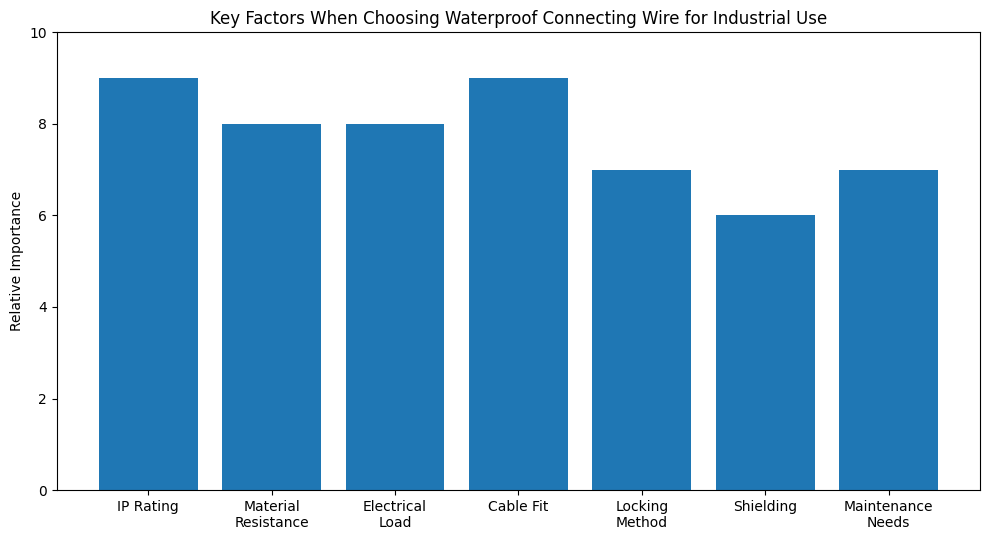
Selection factor | What to check | Why it matters |
IP rating | IP67, IP68, IP69K | Matches water exposure level |
Cable fit | Outer diameter range | Protects seal integrity |
Electrical load | Current and voltage margin | Prevents overheating |
Material | UV, oil, chemical resistance | Extends service life |
Locking type | Threaded, bayonet, push-pull | Improves mechanical security |
Shielding | EMI/RFI protection | Supports signal stability |
Service condition | Mated or unmated sealing | Reduces maintenance risk |
Installation and Maintenance Tips to Maximize Waterproof Connecting Wire Lifespan
Follow Proper Assembly and Torque Practices
Correct installation supports long service life. The seal should be clean, the cable diameter should match the connector range, and the locking mechanism should be tightened correctly. Too little force may leave a leak path. Too much force may damage the seal or housing.
This is why installation training matters. Even a high-quality Waterproof Connecting Wire can fail early if it is assembled carelessly. Buyers should also confirm whether special tools or torque guidance are required.
Protect Connectors During Downtime or Disconnection
In many industrial systems, connectors are unplugged during maintenance, transport, or system changeover. If open connectors are left exposed, moisture and dust can enter quickly. That can reduce the life of both the connector and the cable assembly.
Protective caps, covers, and storage practices help prevent this issue. Buyers should check whether the product family includes these accessories, especially if disconnecting the system is part of normal plant work.
Inspect Regularly for Seal Wear and Corrosion
Regular inspection can prevent unexpected shutdowns. Maintenance teams should check for cracked jackets, worn seals, loose couplings, corrosion, and signs of overheating. Small changes often appear before major failure, so routine checks help reduce emergency repair.
It also helps to document common failure patterns. If one area of the plant creates repeated wear, that may show a mismatch between the application and the selected wire assembly. Good inspection supports better replacement planning.
Plan for Replacement Before Performance Drops
No cable system lasts forever. In harsh environments, replacement should be proactive, not reactive. If a wire assembly shows repeated signal loss, seal damage, or corrosion, it may be close to failure even if it still operates some of the time.
Planned replacement usually costs less than sudden downtime. For industrial buyers, this means the best Waterproof Connecting Wire is not only easy to install, but also easy to monitor and replace when its service life ends.
Conclusion
Choosing the right Waterproof Connecting Wire means matching it to real industrial conditions, not just a label. When buyers compare sealing, materials, fit, and durability together, they gain safer and more stable performance. Dongguan Suyi Electronics Co., Ltd. delivers dependable wiring solutions with strong sealing, flexible customization, and reliable support that help reduce downtime and improve long-term value.
FAQ
Q: What is Waterproof Connecting Wire for industrial use?
A: It is a sealed wire solution for power, signal, or data in wet, dusty, or harsh environments.
Q: How do I choose Waterproof Connecting Wire?
A: Match IP rating, cable size, load, materials, and locking method to the real application.
Q: Why is Waterproof Connecting Wire important?
A: It helps prevent corrosion, signal loss, short circuits, and costly downtime.
Q: Is IP67 or IP68 better for Waterproof Connecting Wire?
A: IP67 suits splash or brief immersion. IP68 is better for longer water exposure.
Q: What affects Waterproof Connecting Wire cost?
A: Materials, shielding, connector type, sealing level, and durability all affect price.


