| Availability: | |
|---|---|
| Quantity: | |
GH 1.25mm
SUYI
Suyi’s Customized Silicone GH 1.25mm Connector Soft Flexible Cable Wire Harness is a high-performance solution designed exclusively for drones and extreme-environment equipment. Built with silicone insulation and a GH 1.25mm connector, it combines exceptional flexibility, wide temperature resistance (-60°C to 200°C), and environmental safety—key attributes for drone systems that operate in harsh weather or high-stress conditions. Fully customizable, it meets the precise wiring needs of drone manufacturers, from consumer drones to industrial inspection models.
| Parameter | Value |
| Model | GH |
| Cable Type | Silicone Flexible Wire Harness |
| Voltage Rating | 300V |
| Current Rating | 1-5A |
| Wire Material | Copper |
| Insulation Material | Silicone |
| Connector Type | Power Interface |
| Shell Material | Aluminum Alloy |
| Contact Material | Gold-Plated Brass |
| Certification | VDE, RoHS, ISO9001,CCC |
| Frequency Range | High Frequency |
| Application | Industrial, Automation, Medical, Automotive, Consumer Electronics |
| Cable Preparation | Trimmed, Stripped, Tin-Coated, Twisted |
| Temperature Range | -60℃ to 200℃ |
| Durability Features | UV Resistance,Oil,Acid,Alkali,Chemical Resistance,Abrasion Resistance, Tear Resistance |
| Flame Retardancy | Self-extinguishing |
| Customization Options | Available (Color, Length, OEM/ODM) |
Suyi’s Customized Silicone GH 1.25mm Connector Soft Flexible Cable Wire Harness is a high-performance solution designed exclusively for drones and extreme-environment equipment. Built with silicone insulation and a GH 1.25mm connector, it combines exceptional flexibility, wide temperature resistance (-60°C to 200°C), and environmental safety—key attributes for drone systems that operate in harsh weather or high-stress conditions. Fully customizable, it meets the precise wiring needs of drone manufacturers, from consumer drones to industrial inspection models.
| Parameter | Value |
| Model | GH |
| Cable Type | Silicone Flexible Wire Harness |
| Voltage Rating | 300V |
| Current Rating | 1-5A |
| Wire Material | Copper |
| Insulation Material | Silicone |
| Connector Type | Power Interface |
| Shell Material | Aluminum Alloy |
| Contact Material | Gold-Plated Brass |
| Certification | VDE, RoHS, ISO9001,CCC |
| Frequency Range | High Frequency |
| Application | Industrial, Automation, Medical, Automotive, Consumer Electronics |
| Cable Preparation | Trimmed, Stripped, Tin-Coated, Twisted |
| Temperature Range | -60℃ to 200℃ |
| Durability Features | UV Resistance,Oil,Acid,Alkali,Chemical Resistance,Abrasion Resistance, Tear Resistance |
| Flame Retardancy | Self-extinguishing |
| Customization Options | Available (Color, Length, OEM/ODM) |
• Operates seamlessly in temperatures ranging from -60°C to 200°C, making it suitable for drones flying in cold climates (e.g., mountainous regions) or near heat sources (e.g., industrial drones near factories).
• Silicone insulation remains stable under temperature fluctuations, avoiding cracking or melting that can cause short circuits.
• Silicone cable material offers exceptional flexibility, maintaining good bending performance even in cold conditions. This allows easy routing inside drone bodies (which have limited space) and reduces stress on connections during flight vibrations.
• Soft texture prevents damage to other drone components (e.g., delicate sensors) during installation or movement.
• Made of non-toxic, RoHS-compliant silicone that releases no harmful gases when burned, meeting global environmental standards.
• Resists UV rays, oil, acid, alkali, and chemicals, and features self-extinguishing flame retardancy—critical for outdoor drone use and high-risk environments.
The global drone market is expanding rapidly, with a CAGR of 13.8% (2024–2030), driven by demand for industrial inspection, agricultural monitoring, and consumer drones. A key market need: drone-specific wire harnesses that can withstand flight stress (vibrations, temperature changes) and fit in compact drone frames. A 2024 survey of drone manufacturers found that 78% prioritize flexibility and temperature resistance in wiring, as rigid or low-temperature cables often fail during flight. Additionally, environmental regulations (e.g., RoHS) are pushing manufacturers to adopt non-toxic components—making this silicone harness a market-ready solution.
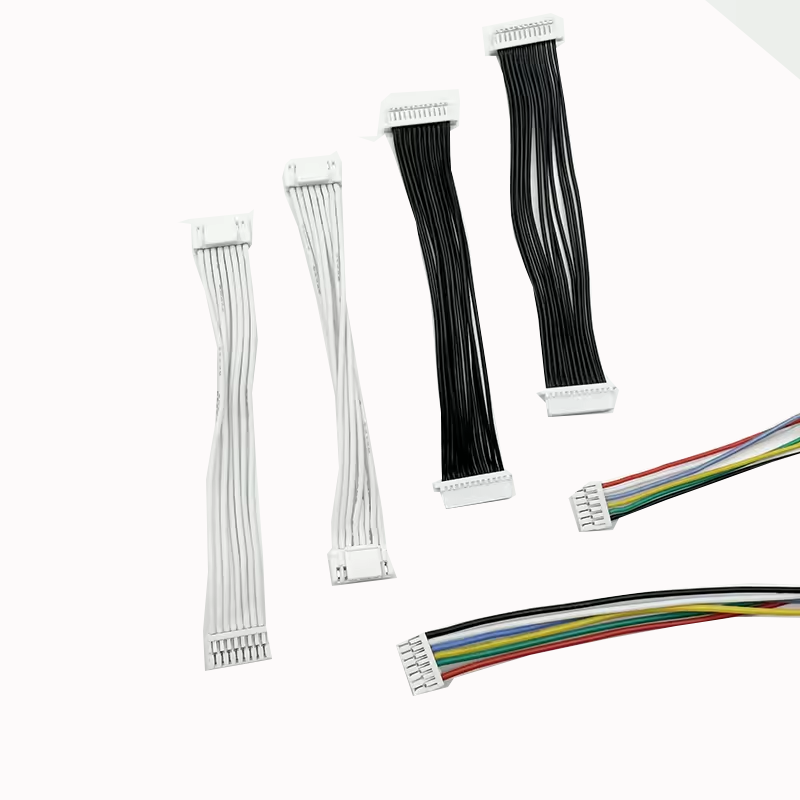
• Operates seamlessly in temperatures ranging from -60°C to 200°C, making it suitable for drones flying in cold climates (e.g., mountainous regions) or near heat sources (e.g., industrial drones near factories).
• Silicone insulation remains stable under temperature fluctuations, avoiding cracking or melting that can cause short circuits.
• Silicone cable material offers exceptional flexibility, maintaining good bending performance even in cold conditions. This allows easy routing inside drone bodies (which have limited space) and reduces stress on connections during flight vibrations.
• Soft texture prevents damage to other drone components (e.g., delicate sensors) during installation or movement.
• Made of non-toxic, RoHS-compliant silicone that releases no harmful gases when burned, meeting global environmental standards.
• Resists UV rays, oil, acid, alkali, and chemicals, and features self-extinguishing flame retardancy—critical for outdoor drone use and high-risk environments.
The global drone market is expanding rapidly, with a CAGR of 13.8% (2024–2030), driven by demand for industrial inspection, agricultural monitoring, and consumer drones. A key market need: drone-specific wire harnesses that can withstand flight stress (vibrations, temperature changes) and fit in compact drone frames. A 2024 survey of drone manufacturers found that 78% prioritize flexibility and temperature resistance in wiring, as rigid or low-temperature cables often fail during flight. Additionally, environmental regulations (e.g., RoHS) are pushing manufacturers to adopt non-toxic components—making this silicone harness a market-ready solution.

1. Demand Analysis
During the customization process, a comprehensive demand analysis is first required. This step includes the following aspects:
Material requirements: Customers can choose from a variety of materials, such as PVC, PTFE, silicone or rubber, to meet different application requirements.
Application scenarios: Clarify the use environment of the harness, including specific requirements for indoor and outdoor use, and the size of the available space.
Temperature and pressure resistance: Determine the high temperature and high pressure resistance required for the harness according to the working environment of the equipment.
Price requirements: Under the premise of ensuring high quality, customers can give priority to low-price options to ensure cost-effectiveness.
2. Design and development
After the demand analysis, enter the design and development stage. This stage mainly includes:
Material selection: Determine the most suitable material according to the specific needs of the customer to ensure product performance and service life.
Design length and volume: Design the appropriate harness length and volume according to the available space, and draw detailed design drawings.
Technical parameter confirmation: Determine the technical parameters of the harness, such as current, voltage level, etc., to meet industry standards and customer needs.
3. Production test
After the design is confirmed, the production and testing stage begins:
Sample production: Sample production is carried out according to the design drawings, which usually takes 3 to 7 days.
Quality inspection: 100% quality inspection is carried out on the produced samples to ensure that each wire harness meets high quality standards.
4. After-sales service
Finally, after-sales service is an important part of ensuring customer satisfaction:
Usage effect attention: After the product is delivered, continue to pay attention to the customer's use effect and collect feedback information in a timely manner.
Optimization and improvement: According to customer feedback, optimize and improve the product to continuously improve product quality and customer experience.
Through the above four steps, Suyi Electronics is committed to providing customers with high-quality customized silicone wire harnesses to ensure that various application needs are met.

1. Demand Analysis
During the customization process, a comprehensive demand analysis is first required. This step includes the following aspects:
Material requirements: Customers can choose from a variety of materials, such as PVC, PTFE, silicone or rubber, to meet different application requirements.
Application scenarios: Clarify the use environment of the harness, including specific requirements for indoor and outdoor use, and the size of the available space.
Temperature and pressure resistance: Determine the high temperature and high pressure resistance required for the harness according to the working environment of the equipment.
Price requirements: Under the premise of ensuring high quality, customers can give priority to low-price options to ensure cost-effectiveness.
2. Design and development
After the demand analysis, enter the design and development stage. This stage mainly includes:
Material selection: Determine the most suitable material according to the specific needs of the customer to ensure product performance and service life.
Design length and volume: Design the appropriate harness length and volume according to the available space, and draw detailed design drawings.
Technical parameter confirmation: Determine the technical parameters of the harness, such as current, voltage level, etc., to meet industry standards and customer needs.
3. Production test
After the design is confirmed, the production and testing stage begins:
Sample production: Sample production is carried out according to the design drawings, which usually takes 3 to 7 days.
Quality inspection: 100% quality inspection is carried out on the produced samples to ensure that each wire harness meets high quality standards.
4. After-sales service
Finally, after-sales service is an important part of ensuring customer satisfaction:
Usage effect attention: After the product is delivered, continue to pay attention to the customer's use effect and collect feedback information in a timely manner.
Optimization and improvement: According to customer feedback, optimize and improve the product to continuously improve product quality and customer experience.
Through the above four steps, Suyi Electronics is committed to providing customers with high-quality customized silicone wire harnesses to ensure that various application needs are met.

Yes. It meets RoHS, VDE, and ISO 9001 standards, with non-toxic silicone materials that contain no harmful substances. It also releases no toxic gases when burned, making it safe for both the environment and indoor/outdoor use.
Absolutely. The silicone insulation is moisture-resistant, and the GH 1.25mm connector features a secure seal that prevents water ingress. This makes it suitable for rainy or humid flight conditions (e.g., agricultural drones flying over wet fields).
We conduct 100% quality testing on every harness, including electrical performance tests (voltage/current stability), temperature resistance tests (-60°C to 200°C), and flexibility tests (bending endurance). This ensures each harness meets the high standards required for drone flight safety.
Yes. It meets RoHS, VDE, and ISO 9001 standards, with non-toxic silicone materials that contain no harmful substances. It also releases no toxic gases when burned, making it safe for both the environment and indoor/outdoor use.
Absolutely. The silicone insulation is moisture-resistant, and the GH 1.25mm connector features a secure seal that prevents water ingress. This makes it suitable for rainy or humid flight conditions (e.g., agricultural drones flying over wet fields).
We conduct 100% quality testing on every harness, including electrical performance tests (voltage/current stability), temperature resistance tests (-60°C to 200°C), and flexibility tests (bending endurance). This ensures each harness meets the high standards required for drone flight safety.