Introduction
Reliable power often fails at the connection first, not at the equipment itself. Moisture, dust, salt, and vibration can slowly weaken performance and cause unstable current flow over time. Waterproof Connecting Wire helps protect against corrosion, power loss, and early connection failure. In this article, you will learn why it matters and how it supports long-term electrical reliability.
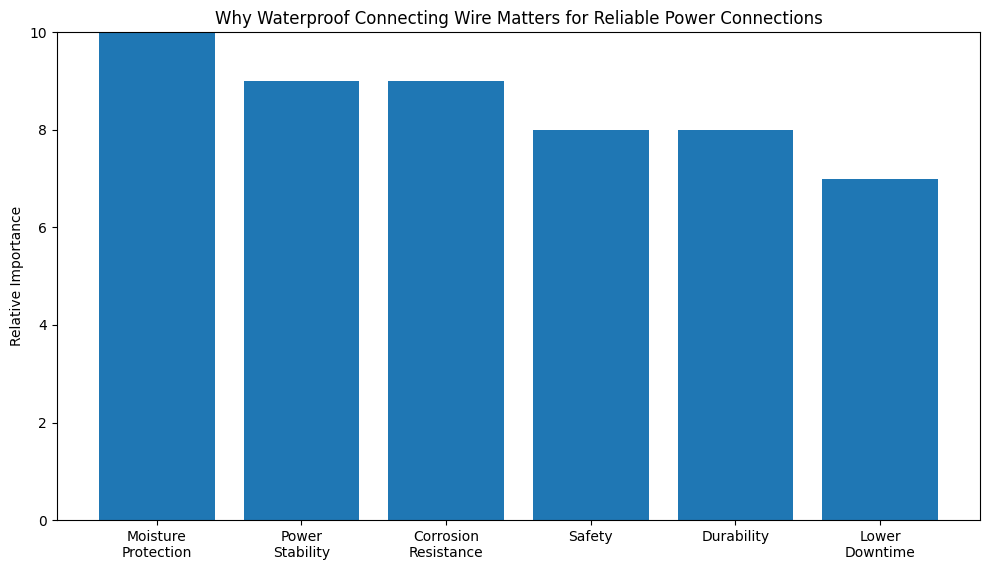
Why Waterproof Connecting Wire Matters for Reliable Power Connections
It Prevents Moisture Ingress at Critical Connection Points
Moisture is a leading cause of power connection failure. It does not take flooding to create damage. Rain, humidity, or repeated condensation can slowly enter a weak connection and start oxidation. Once that happens, resistance rises and performance begins to drop.
Waterproof Connecting Wire helps stop this early. It uses sealed interfaces, protected housings, and cable entry protection to keep water away from conductive parts. This is especially important in outdoor equipment, marine systems, industrial power units, and exposed infrastructure. A dry connection stays cleaner, transfers current more consistently, and lasts longer.
It Keeps Power Delivery Stable Over Time
Stable power depends on more than voltage rating or conductor size. It also depends on clean, low-resistance contact surfaces. When corrosion or contamination builds inside a connection, current flow becomes less stable. This can show up as flickering lights, unstable loads, random resets, or excess heat at the joint.
A sealed Waterproof Connecting Wire assembly helps maintain a more reliable electrical path. It protects the current flow from outside interference and supports steadier performance over time. In outdoor lighting, field power systems, machinery, and low-voltage controls, this added stability helps both the connection and the equipment it serves.
It Protects Connectors From Dust, Dirt, and Contaminants
Water is not the only threat in harsh environments. Dust, dirt, oil mist, salt, and airborne chemicals can also damage connection quality. In factories, fine particles disturb sealing surfaces. In outdoor systems, dirt and moisture often combine to speed up wear and corrosion.
That is why Waterproof Connecting Wire offers broader value than its name suggests. A strong sealed design also helps block contamination and keep the connection cavity cleaner. Reliable power depends on a clean electrical path, and better protection helps preserve that condition for longer.
It Reduces Corrosion in Outdoor and Industrial Installations
Corrosion is a slow issue, but it creates costly results. It weakens metal surfaces, raises resistance, lowers conductivity, and can eventually damage the terminal itself. In outdoor and industrial systems, corrosion often begins before it becomes visible.
Waterproof Connecting Wire reduces this risk by limiting exposure to moisture, air, salt, and industrial contaminants. This is especially important in coastal power systems, construction equipment, washdown machinery, and exposed infrastructure. Less corrosion means more predictable performance and easier maintenance.
It Improves Connection Safety in Wet Locations
Connection safety is not only about voltage. Moisture can still create leakage, rising resistance, and localized overheating, even in lower-voltage systems. In more demanding applications, this may lead to damaged devices, unstable loads, or even fire risk.
A properly sealed Waterproof Connecting Wire system helps reduce these risks. It supports better electrical isolation and protects the current path from water-related faults. Safer connections are also easier to inspect, trust, and maintain in daily operation.
It Supports Reliable Power in High-Vibration and High-Movement Systems
Many power systems face constant mechanical stress. Machines vibrate, vehicles move, portable units shift, and outdoor installations expand and contract with temperature changes. A normal wire connection may work at first, then loosen over time. Once that happens, sealing pressure drops and current stability suffers.
That is why Waterproof Connecting Wire often includes locking systems, strain relief, and durable housings in addition to sealing. These features help keep the connection secure under movement. For transport systems, robotics, factory machinery, renewable energy equipment, and field devices, that mechanical stability is a key part of reliable power.
What Happens When Power Connections Are Not Properly Waterproofed
Early Signs of Failure in Standard Wire Connections
Connection failure rarely starts as a total outage. More often, it begins with small warning signs. A light flickers once in a while. A device restarts without warning. A cable joint feels warmer than expected. These symptoms are easy to ignore, but they often point to early moisture damage or rising resistance inside the connection.
The reference source notes that water exposure can cause corrosion, short circuits, and long-term instability if waterproofing is not maintained. Standard wire connections in wet or dirty environments are more likely to show these early symptoms because they were not built for ongoing exposure.
The danger is that these small signs usually grow worse over time. As resistance rises, heat increases. As heat increases, degradation speeds up. Preventing the first failure step is far easier than repairing the final result.
Why Small Moisture Leaks Cause Large System Problems
A connection does not need to fill with water to fail. Even a small leak can create major system problems. Moisture enters through a weak seal, poor cable fit, or an improperly closed housing. Once inside, it starts corroding the contact area and lowering electrical quality. The change may be gradual, but it is persistent.
This is why minor ingress should never be treated as minor risk. A small leak can affect one fixture today, one branch tomorrow, and one full circuit later. In production systems, that means lost time and repeated technician visits. In infrastructure systems, it can create faults that are difficult to locate across large installations.
A true Waterproof Connecting Wire design matters because it prevents that chain reaction early. It turns a vulnerable interface into a controlled, sealed one.
The Hidden Cost of Unreliable Power Connections
The direct cost of a failed connector is usually small. The hidden cost is much larger. It includes downtime, technician labor, fault tracing, equipment reset, lost production, and sometimes replacement of devices damaged by unstable current. In B2B settings, the most expensive part of a bad connection is often the disruption that follows.
This is why waterproof wire systems should be judged by lifecycle value, not only by unit price. A cheaper connection that fails in the field can cost much more than a higher-grade sealed solution installed correctly at the start. The harder the site is to access, the more this difference matters.
The table below shows the contrast clearly:
Factor | Standard Connection in Harsh Use | Waterproof Connecting Wire |
Moisture resistance | Low | High when properly sealed |
Corrosion exposure | Higher | Lower |
Power stability | Can decline over time | More stable long term |
Maintenance demand | More frequent | Lower |
Downtime risk | Greater | Reduced |
Waterproof Connecting Wire vs. Standard Wire for Power Reliability
Standard Connections in Dry Conditions vs. Harsh Conditions
Standard wire assemblies can perform well in dry, protected indoor conditions. In clean cabinets and controlled spaces, they often provide acceptable service at a lower upfront cost. The problem begins when the same design is used outdoors or in high-stress locations. Rain, dust, UV, vibration, and washdown all introduce risks that standard wiring was never meant to resist.
Waterproof Connecting Wire matters because it is built for those realities. It protects the connection point in places where a normal assembly would slowly degrade. The performance gap between standard and waterproof solutions often becomes clear only after months of exposure.
Waterproof Connecting Wire vs. Water-Resistant Solutions
Many people treat water-resistant and waterproof as nearly the same. They are not. A water-resistant design may survive light splash or short exposure. That may be enough for mild environments. But harsh applications usually need a sealed system that keeps water and contaminants out of the connection zone over time.
A true Waterproof Connecting Wire assembly is designed for repeated exposure and long-term service. It is a better choice when the cost of power interruption is high or when maintenance access is difficult. That distinction matters because many failures happen in systems that had some protection, but not enough.
Full-System Reliability Depends on More Than the Connector
A connector alone does not make a system waterproof. The cable jacket, terminal plating, seal design, housing shape, locking method, and installation quality all matter. If one of those parts is weak, the whole system becomes vulnerable. A strong connector on the wrong cable can still fail. A good cable in a poorly assembled housing can fail just as easily.
This is why Waterproof Connecting Wire should be treated as a full assembly choice. The reference material supports this system-level view by explaining that sealing, installation, and regular inspection are all necessary to maintain waterproof performance.
Where Waterproof Connecting Wire Makes the Biggest Difference
Waterproof Connecting Wire for Outdoor Lighting and Infrastructure
Outdoor lighting systems, traffic devices, signage, and public infrastructure all depend on exposed power connections. These installations face repeated rain, dust, UV, and temperature swings. They also often cover large areas, which makes troubleshooting and repair more expensive. In this setting, Waterproof Connecting Wire makes a clear difference because it protects the most failure-prone part of the system.
A sealed connection helps prevent flicker, outage, and repeat maintenance visits. It also improves consistency across the full installation. For contractors and facility operators, that means better uptime and fewer field service events.
Waterproof Connecting Wire for Marine and Coastal Power Systems
Marine and coastal systems face some of the most aggressive electrical conditions. Salt spray, humidity, direct water exposure, and temperature cycles all speed up corrosion and shorten connection life. In these settings, even a small sealing weakness becomes a serious long-term risk.
Waterproof Connecting Wire helps protect the power path from salt-driven degradation and repeated moisture exposure. This is essential for boats, docks, pumps, shoreline infrastructure, and coastal monitoring devices. In marine use, waterproof wire is not just a performance upgrade. It is often a reliability requirement.
The harsher the environment, the more valuable corrosion control becomes. That is why marine systems benefit so strongly from sealed wire assemblies.
Waterproof Connecting Wire for Industrial Equipment and Machinery
Industrial equipment often operates in washdown zones, humid plants, oily processing areas, and vibration-heavy production lines. These conditions attack wire connections constantly. If the system uses a standard or weakly sealed connection, failure becomes a matter of time.
The reference source highlights the importance of proper waterproofing, durable materials, and correct sealing methods in industrial environments where exposure is ongoing. Waterproof Connecting Wire supports reliable current flow in these settings by protecting both the electrical path and the mechanical integrity of the joint.
Waterproof Connecting Wire for Low-Voltage and Field Systems
Many people assume low voltage means low risk. That is misleading. Low-voltage systems still fail when moisture enters the connection. Corrosion still builds. Leakage still occurs. Current still becomes unstable. The source material on low-voltage waterproof connectors explains this clearly by noting that low voltage lowers shock risk, but does not remove the need for strong sealing.
This is why Waterproof Connecting Wire matters in solar systems, landscape lighting, field controls, remote monitoring devices, and other exposed low-voltage installations. These systems still need dependable performance over time, especially in outdoor service.
Even when voltage is modest, long-term power stability still depends on keeping the connection dry, clean, and secure.
Key Features That Make Waterproof Connecting Wire Reliable
Sealing Structures That Block Water and Air
The most important feature in a waterproof wire system is the sealing structure. Gaskets, O-rings, molded cable entries, and heat-shrink seals all help block moisture and air from reaching the contact zone. These parts may look small, but they perform the most critical protective job in the full assembly.
Good sealing also depends on proper compression, alignment, and cable diameter. A strong seal design cannot fully compensate for the wrong cable or poor installation. That is why buyers should treat the sealing method as a core performance feature, not just a technical detail.
Durable Materials for Real-World Exposure
Material choice shapes service life. PVC, TPE, and polyethylene are commonly used because they offer moisture resistance and useful environmental durability. The source text specifically identifies these materials as common options in waterproof cable construction. Depending on the site, buyers may also need UV resistance, abrasion resistance, chemical protection, or flexibility under movement.
In other words, waterproof reliability is not only about the seal. It is also about whether the housing and jacket can survive the conditions around that seal.
IP Ratings and What They Mean for Reliable Power
IP ratings help buyers compare levels of environmental protection. IP67 often suits temporary immersion or strong outdoor exposure. IP68 is better where longer water exposure is possible. In harsher washdown environments, even stronger protection may be needed. These ratings are useful, but only when matched to the real application.
A common mistake is treating any waterproof rating as equally suitable. In fact, the correct level depends on water pressure, immersion risk, dust exposure, and maintenance practice. Power reliability improves when the rating reflects the real site, not just the product label.
Locking and Strain-Relief Designs That Protect Power Stability
A waterproof connection also needs mechanical stability. Locking systems keep the connector mated. Strain relief protects the cable from pullout, repeated bending, and vibration stress. These features matter because power reliability is lost quickly when the connection begins to move or loosen.
This is especially true in vehicles, machinery, portable power systems, and outdoor field equipment. A connector may have excellent sealing, but if it loosens during use, the electrical path becomes unstable. Mechanical protection should always be reviewed alongside waterproof performance.
How to Choose Waterproof Connecting Wire for Reliable Power Connections
Match the Wire to the Environment
The first step is to define the environment honestly. Will the connection face rain, UV, washdown, chemicals, vibration, or salt air? Each of these conditions changes the kind of waterproof wire system required. A product that works well in a dry indoor area may fail quickly outside or in a humid plant.
Choosing Waterproof Connecting Wire based on real environmental exposure is the strongest way to avoid mismatch. It helps buyers focus on long-term performance instead of short-term price.
Match the Electrical Load and Cable Size
A waterproof system still needs to meet the electrical demand. Conductor size, current level, and cable outer diameter all affect reliability. If the conductor is undersized, it may run too hot. If the cable outer diameter does not fit the seal correctly, the waterproof claim may fail in practice.
Reliable power depends on both electrical margin and physical compatibility. That is why load and cable size should always be reviewed together.
Check the Mated Protection Level
Some waterproof systems provide their full rating only when fully mated. That matters in installations where the connection is unplugged during service or exposed in an unmated state. Buyers should confirm how the product performs in real operating conditions, not just in ideal test conditions.
This becomes especially important for maintenance-heavy systems or equipment that is often reconfigured. A waterproof claim that applies only in limited conditions may not deliver the reliability the site actually needs.
Review Installation and Maintenance Requirements
The source material stresses that proper sealing at the connection point, correct insulation, and regular inspection are all necessary to preserve waterproof cable performance. That means installation quality is part of reliability, not a separate issue. A good product still needs correct assembly, proper sealing pressure, and suitable service access.
Conclusion
Waterproof Connecting Wire matters because reliable power depends on sealed, stable, and corrosion-resistant connections. In wet and high-stress environments, it helps protect current flow, reduce downtime, and improve long-term operating value.
The best choice matches the real application, not just the lowest price. Dongguan Suyi Electronics Co., Ltd. provides dependable wiring solutions with durable construction, strong sealing performance, and flexible service support for more reliable power connections.
FAQ
Q: What is Waterproof Connecting Wire?
A: Waterproof Connecting Wire is sealed wiring that protects power connections from moisture and corrosion.
Q: Why does Waterproof Connecting Wire matter?
A: Waterproof Connecting Wire helps prevent power loss, overheating, and unstable current flow.
Q: How does Waterproof Connecting Wire improve reliability?
A: Waterproof Connecting Wire keeps connections dry, clean, and stable over time.
Q: Is Waterproof Connecting Wire better than standard wire?
A: Yes. Waterproof Connecting Wire performs better in wet, dusty, or high-vibration environments.
Q: Does Waterproof Connecting Wire cost more?
A: It may cost more upfront, but it often lowers repair and downtime costs later.


